
What Is Freelancing? Complete Beginner’s Guide 2026
 By M. Zaid
- Updated October 22, 2026
- 19 min read
What is freelancing? It is a way of working independently by offering your skills or services to clients instead of relying on a traditional full-time job with one employer. Freelancers may write articles, design websites, edit videos, manage social media, develop software or provide business support. Some freelance part-time alongside another job, while others build a full-time business.
But how does freelance work actually operate, where do beginners find clients, and how do they get paid? This guide answers what is freelancing in plain English: the meaning, common types of work, income models, advantages, risks and practical steps to help you decide whether it is right for you.
Quick answer: What is freelancing? It means working independently for clients and getting paid for specific services, projects or agreed hours. Freelancers usually find their own clients, negotiate prices, deliver the agreed work and manage payments, business expenses and taxes. You can begin with one marketable skill, build a small portfolio and gradually seek paid projects.
Ready to see where clients post work?
See Freelance Platforms →What Is Freelancing in Simple Words?
Freelancing is a form of independent work where you offer a service to one or more clients without becoming their employee. Instead of receiving a salary from one employer, you typically earn money by completing assignments, projects or ongoing contracted work.
Imagine you know how to design book covers. An author hires you to create a cover for a new book, and you agree on the design, deadline, revisions and payment. You deliver the finished files and receive payment according to your agreement. You can then work with another author or business. That is what is freelancing in simple words: you sell a skill or service directly to clients and manage the work yourself.
Freelancing does not automatically mean working from home. You might work remotely on a laptop, visit a client’s workplace or provide services locally. What matters is the nature of the working relationship, not where the work happens.
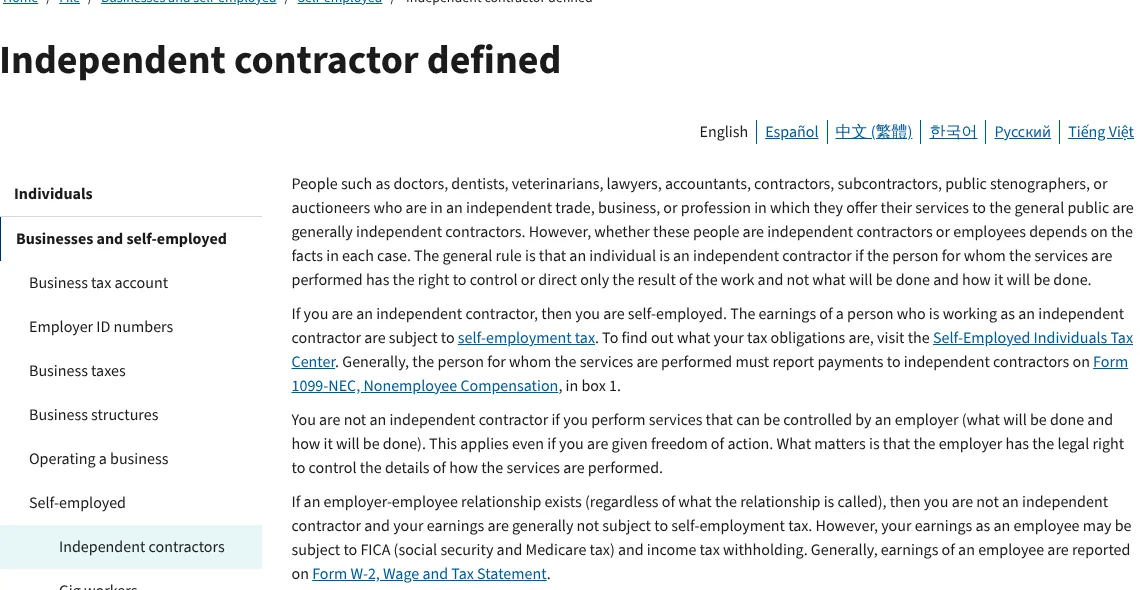
A freelancer may work with several clients at once or keep a long-term contract with one client. However, the label in a contract does not decide legal status on its own. In the United States, the IRS says the general rule is that someone is an independent contractor if the payer has the right to control or direct only the result of the work, not what will be done and how it will be done.
How Does Freelancing Work?
The practical side of what is freelancing is a repeatable process. It usually follows the same steps, although the details differ by profession and client.
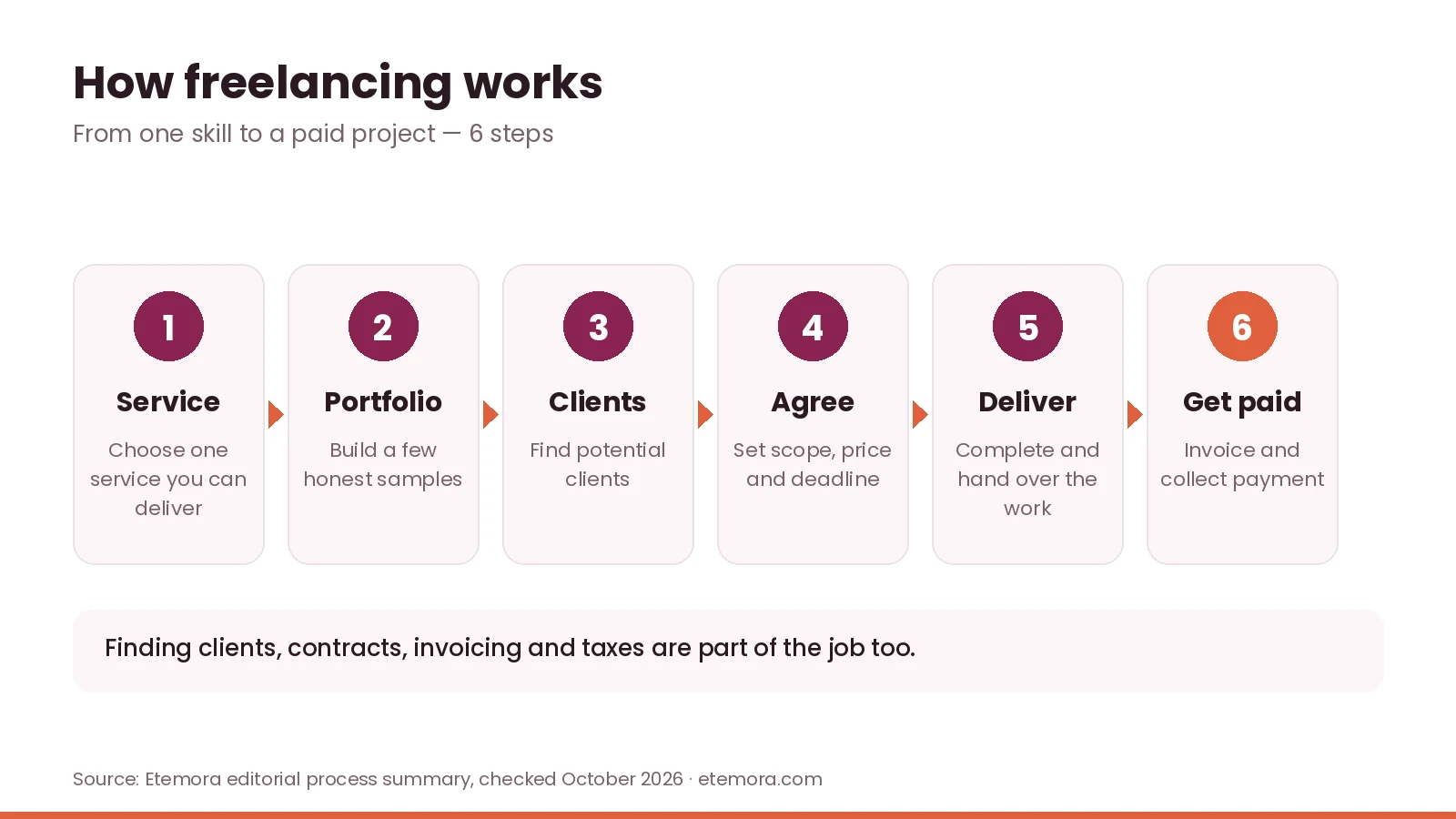
- Choose a service. Decide what you can offer, such as writing, graphic design, website development, translation or administrative support.
- Find potential clients. Look through freelance marketplaces, professional networks, referrals or direct business outreach.
- Agree on the work. Discuss deliverables, deadline, price, revisions, communication and payment terms.
- Complete the project. Do the agreed work and tell the client early if requirements or timelines change.
- Deliver the files or service. Provide the agreed result in the requested format.
- Receive payment. Follow the contract or platform payment process, including any fees or approval steps.
- Build relationships. Ask satisfied clients about future work and, with permission, use completed projects in your portfolio.
For example, a business might hire a freelance writer to create four blog posts. The writer agrees on topics, word counts, deadlines and payment before starting, then submits the articles and is paid under the contract.
The important point is that freelancing involves more than the work itself. Finding customers, communicating clearly, managing deadlines, tracking expenses and following up on payments are all part of running a freelance business.
What Jobs Can You Do as a Freelancer?
Part of understanding what is freelancing is seeing how wide the range of work is. The right option depends on your skills, interests, experience, equipment and the clients you can reach.
Writing and editing
Freelance writers create blog posts, website copy, product descriptions, newsletters, scripts and other material. Editors review content for clarity, grammar, consistency and structure. Research skills and the ability to follow a brief matter here.
Graphic design
Designers may create logos, book covers, advertisements, social media graphics and presentations. A portfolio that shows relevant work helps clients judge whether your style suits them.
Website development and design
Freelancers build or maintain websites, create landing pages, fix technical issues and customise content management systems. Work may require coding, design skills or experience with website builders. Developers can compare freelance websites for developers before choosing where to look.
Video editing
Video editors work on YouTube videos, short-form social content, promotional videos and tutorials. The job can require editing software, a capable computer, storage and a clear sense of the client’s style.
Digital marketing and SEO
Marketing freelancers may research keywords, optimise pages, manage social accounts, prepare email campaigns or run advertising. They need to explain clearly what their work can reasonably achieve.
Virtual assistance and admin support
Virtual assistants help with scheduling, research, document preparation, customer communication and data organisation. Responsibilities depend on the client’s business.
Programming and technical services
Developers may build applications, automate workflows, maintain software or fix bugs. Technical freelancers usually prove their knowledge through projects, code samples or previous work.
Translation and transcription
Translators convert written content between languages, while transcriptionists turn audio or video into text. Accuracy, subject knowledge and confidentiality matter.
You do not need to offer every service. Starting with one clearly defined skill makes it easier to explain your value and find suitable clients.
What Is the Difference Between Freelancing and a Job?
Comparing it with a regular job is the quickest way to answer what is freelancing in practice. The main difference is the working relationship. An employee generally works within an employer’s organisation, while a freelancer typically provides services independently under an agreement.
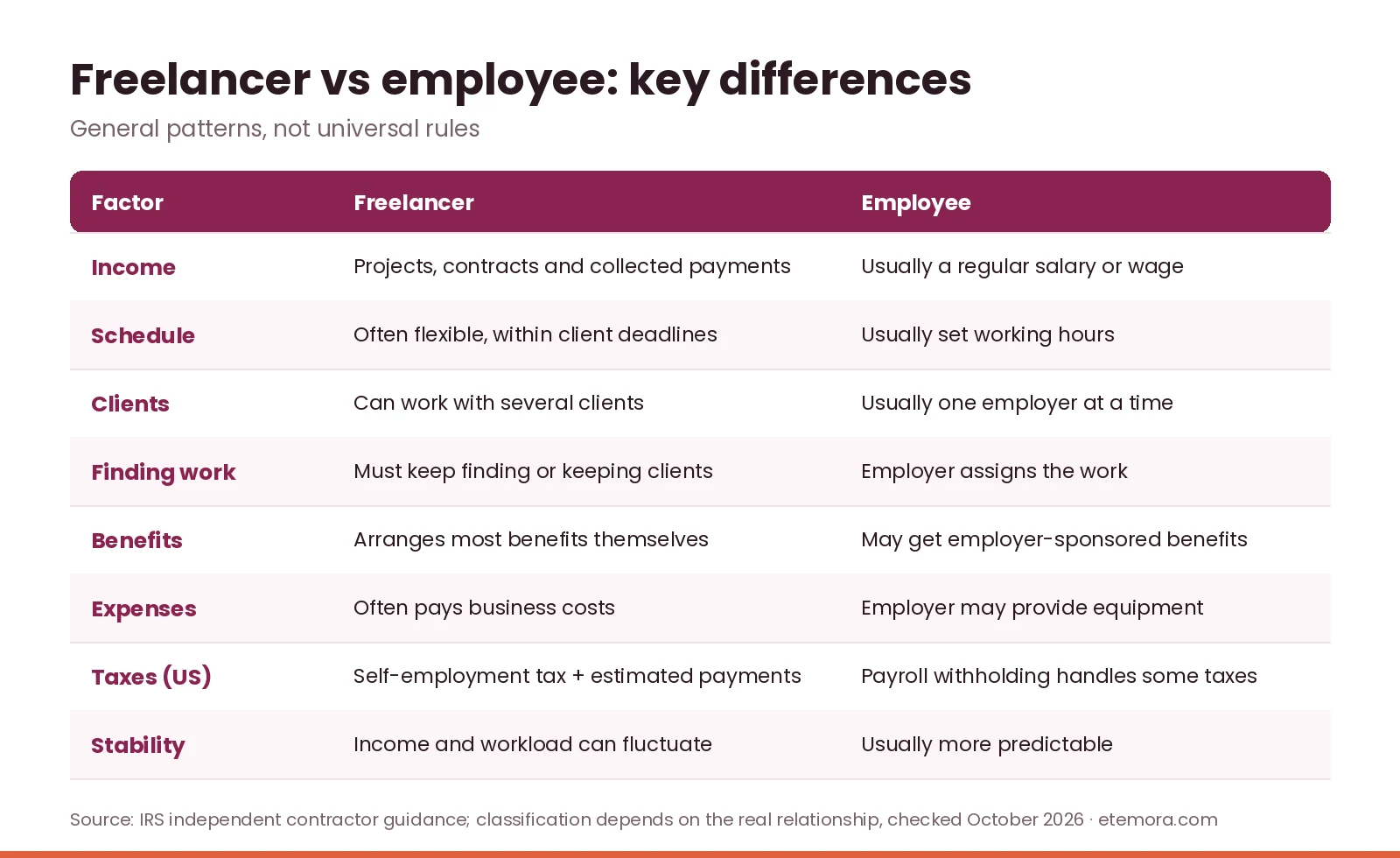
| Factor | Freelancing | Traditional employment |
|---|---|---|
| Income | Depends on projects, contracts and collected payments | Usually a regular salary or wage |
| Schedule | Often more flexible, within client deadlines | Usually follows assigned hours |
| Clients | May work with multiple clients | Usually one employer at a time |
| Work availability | Must keep finding or retaining clients | Employer generally assigns work |
| Benefits | Arranges many benefits independently | May receive employer-sponsored benefits |
| Expenses | Often pays business costs | Employer may provide equipment |
| Taxes (US) | Self-employment tax and estimated payments may apply | Payroll withholding handles certain taxes |
| Stability | Income and workload may fluctuate | Often more predictable |
These are general differences. Some freelancers have recurring contracts, and some employees have variable schedules or pay.
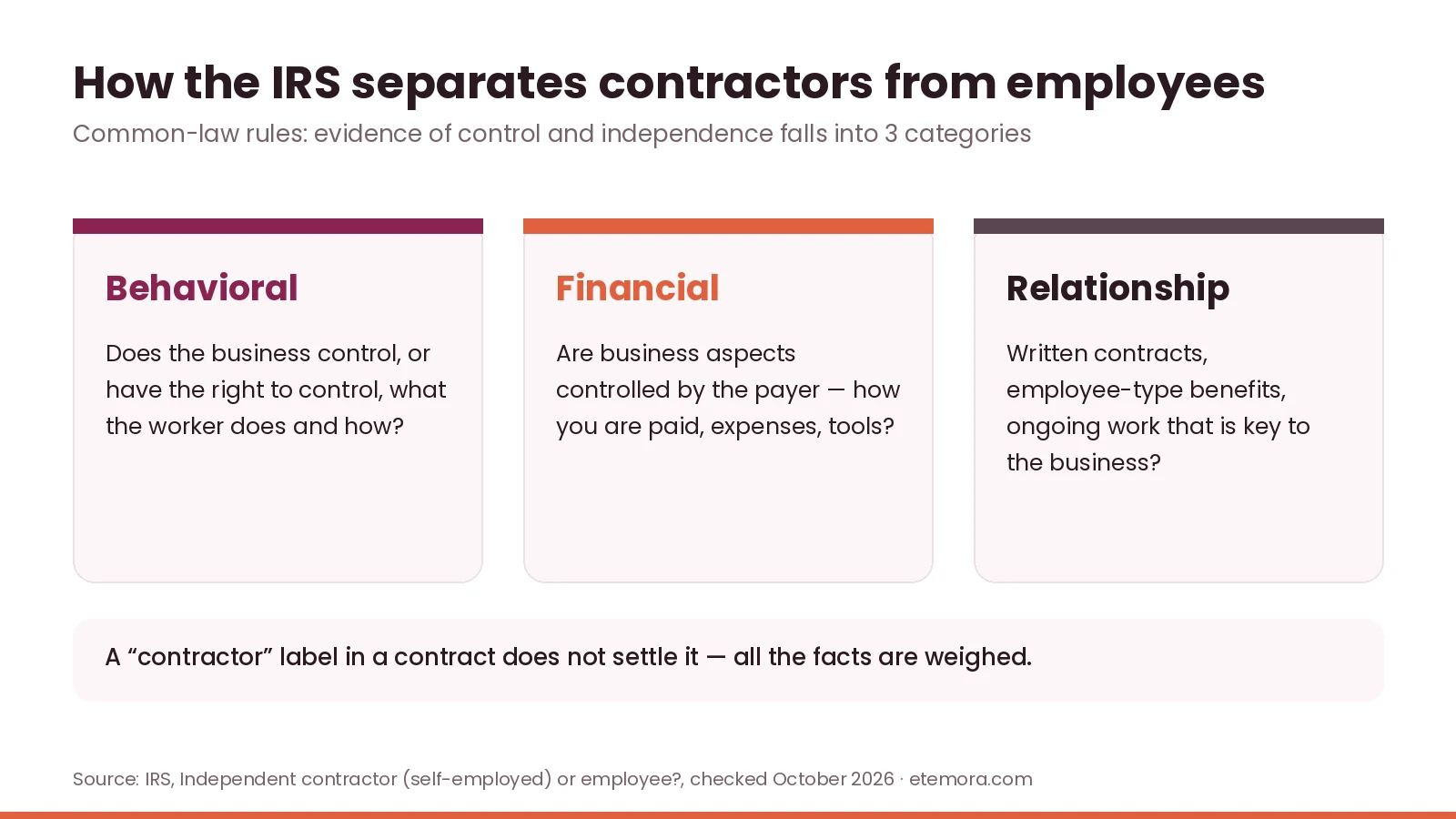
Worker classification matters too. The IRS’s guidance on contractors and employees groups the evidence into three categories: behavioral control, financial control and the type of relationship. It also notes that a remote worker can still be an employee if the business controls what is done and how.

How Do Freelancers Make Money?
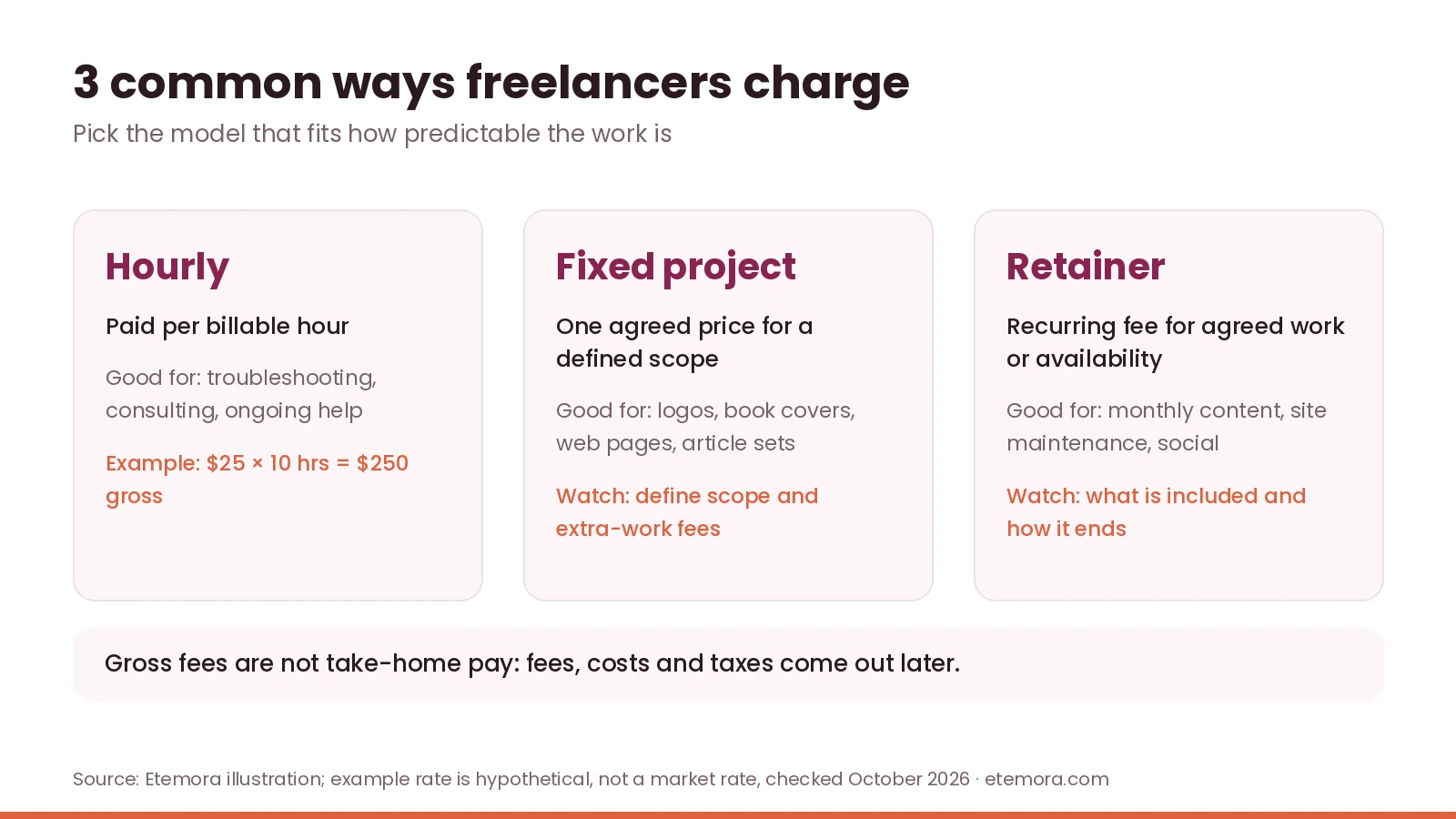
Money is where what is freelancing gets practical. Freelancers earn by selling services under agreed payment terms. Three common pricing models are hourly rates, fixed project fees and ongoing retainers.
Hourly pricing
The client pays an agreed rate for each billable hour. This suits work where the time needed is hard to predict, such as troubleshooting, consulting or ongoing help. If you charge $25 per hour and complete 10 billable hours, the gross fee is $250 before platform fees, taxes and other expenses. This is an illustration, not a typical or recommended market rate.
Fixed project pricing
The freelancer and client agree on a total price for a defined project, such as a logo package, a website page or a set of articles. Fixed pricing makes costs clearer for clients, but you need to define the scope carefully and agree how extra requests are handled.
Retainers and recurring contracts
Some clients pay a recurring fee for an agreed amount of work or availability, such as monthly content, site maintenance or social media support. The contract should say what is included, how extra requests are billed and how either side can end it.
Gross income is not take-home pay
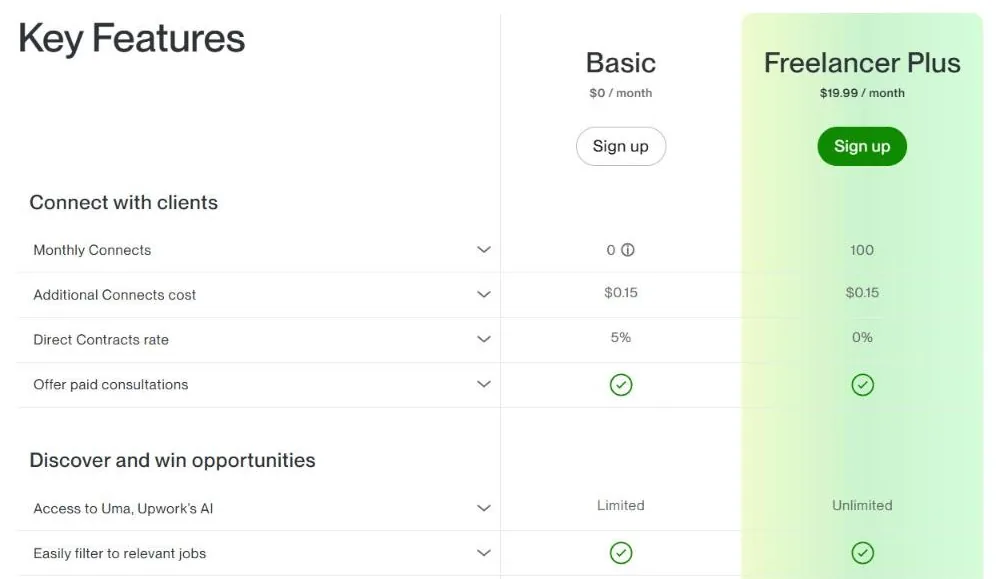
Your take-home income will be lower than your gross earnings once you account for platform fees, software, equipment, payment processing and taxes. On Upwork, for example, the freelancer service fee ranges from 0% to 15% per contract. Its freelancer pricing page lists a free Basic plan and a Freelancer Plus plan at $19.99 per month with 100 Connects, extra Connects at $0.15 each, and a 5% Direct Contracts rate on Basic (0% on Plus). Our Upwork fees explained guide breaks these costs down.
In the United States, taxes are a big part of the gap. The IRS says the self-employment tax rate is 15.3% (12.4% Social Security plus 2.9% Medicare), on top of income tax.

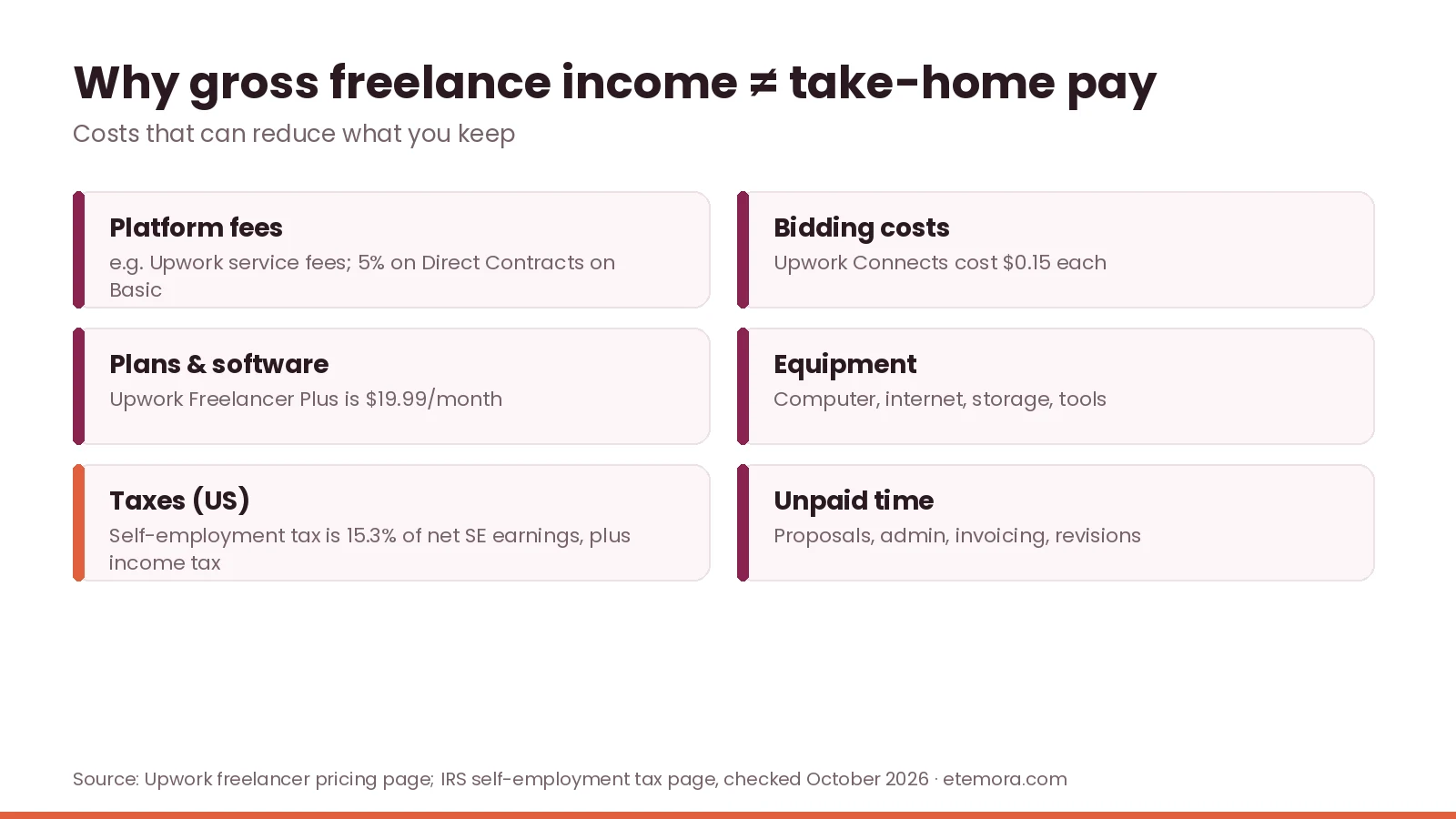
Also count the unpaid time spent finding clients, writing proposals, handling admin and correcting work.
Is Freelancing Good for Beginners?
For many people, the answer to what is freelancing is simple: a first step into independent work. Yes, freelancing can be a starting point for beginners who have a useful skill, or are willing to build one, and can find clients who need it. You do not need a formal degree for every freelance service, but you do need to deliver work that meets the client’s requirements.
If you have no paid experience, create sample projects. An aspiring writer might prepare two or three original articles; a beginner designer could create sample book covers; a prospective virtual assistant might show a well-organised scheduling workflow. Be honest about samples: practice work should never be presented as work for real clients.
Avoid competing only on the lowest price. Make your offer specific and manageable: “I will format a five-page business report” is clearer than “I can do any computer work.” Good communication, meeting deadlines and following the agreed scope help you earn repeat work. Our step-by-step guide on how to start freelancing goes deeper on the first month.
Where Can You Find Freelance Work?
Once you understand what is freelancing, the next question is where clients come from. Freelancers find work through marketplaces, professional networks, personal websites, referrals and direct outreach. Each route has trade-offs.
Freelance marketplaces
Platforms such as Upwork and Fiverr connect clients with freelancers, although their systems and service models differ. Marketplaces help beginners discover opportunities, but competition, account rules, platform fees and payment policies all matter. Compare freelance platforms for finding clients, or read our Upwork vs Fiverr comparison for two established options.
Professional networking
Professional networks help you connect with businesses and show expertise. A clear profile should explain your service, who you help and the work you want.
Personal website and portfolio
A website gives you a place for samples, services, process and contact details. It can take time to attract visitors, so treat it as a complement to other client-finding methods at first.
Referrals and direct outreach
Ask satisfied clients for referrals, or contact businesses that could benefit from your service. Research each business and send a relevant, personalised message rather than generic pitches.
How to Start Freelancing Step by Step
If you are asking what is freelancing because you want to try it yourself, use this practical eight-step plan.
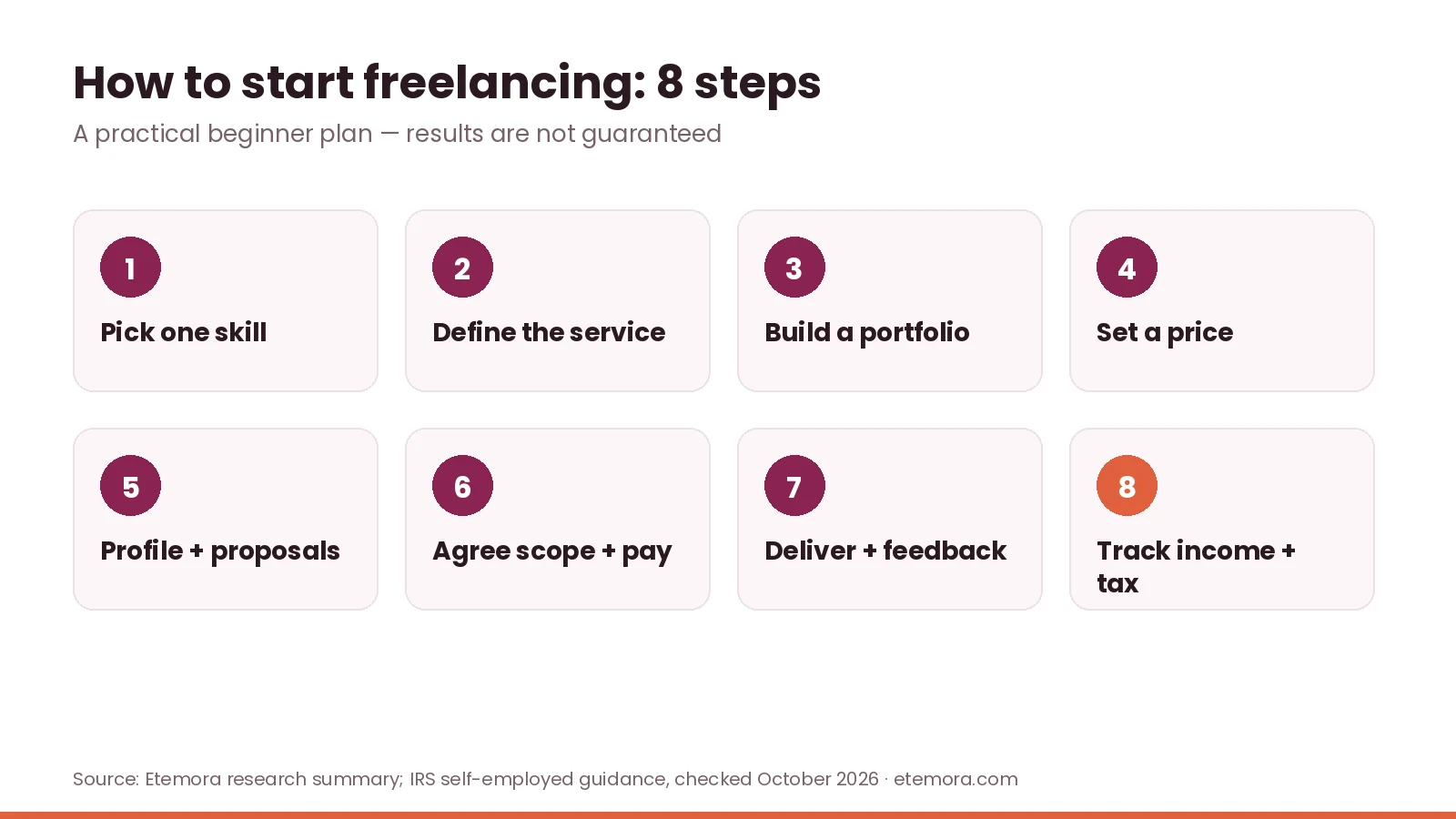
Step 1: Choose one marketable skill
List the tasks you can already do, or could learn, to a professional standard. Look for the overlap between your ability, the work you enjoy and services businesses actually buy.
Step 2: Define your service
Describe exactly what a client receives. Instead of “I do graphic design,” offer a defined package of social media graphics or a book cover with agreed file formats and revisions.
Step 3: Build a small portfolio
Create a few relevant samples and explain the problem each one solves. Ask permission before showing client work, and label practice work clearly.
Step 4: Set a sensible starting price
Research comparable services, consider your experience and estimate time and expenses, including unpaid business tasks. Don’t assume the highest advertised rate is typical, and don’t promise a price so low you cannot do the job properly.
Step 5: Prepare your profile and proposals
Write a profile focused on the client’s needs. In each proposal, refer to the specific project, explain your approach briefly and ask essential questions. Good AI tools for freelance tasks can help with drafts and organisation, but the claims must be yours and accurate.
Step 6: Agree on scope and payment
Before starting, document deliverables, deadline, price, revision limits, communication and payment schedule. For larger projects, consider milestones or a deposit. On a marketplace, follow its contract and payment rules.
Step 7: Deliver and request feedback
Submit the agreed work on time and communicate early about delays. Ask for feedback afterwards, and use reviews or testimonials only with permission. Never fabricate endorsements.
Step 8: Track income and expenses
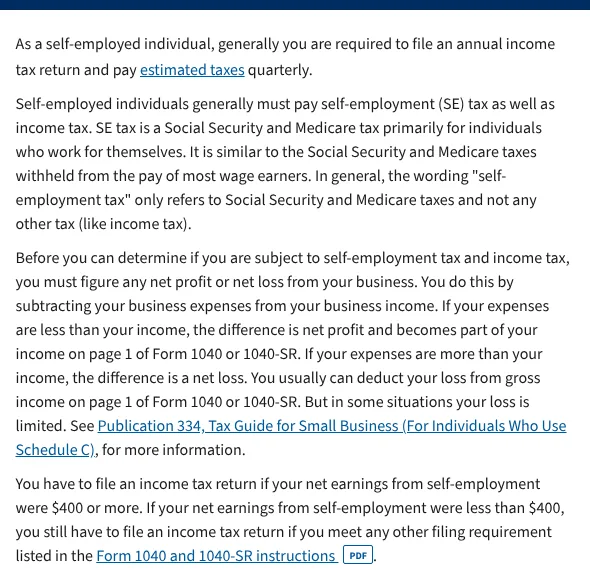
Keep records of payments, invoices, platform fees, software and equipment. In the United States, the IRS’s Self-Employed Individuals Tax Center says you generally must file a return if net self-employment earnings are $400 or more, and self-employed people generally pay estimated taxes quarterly. Freelancers elsewhere should check their local tax authority.
Comparing where to look for your first client?
View Upwork Freelancer Plans →What Are the Advantages and Disadvantages of Freelancing?
A fair answer to what is freelancing has to include both sides: it offers flexibility, but it also moves many responsibilities from an employer to you.
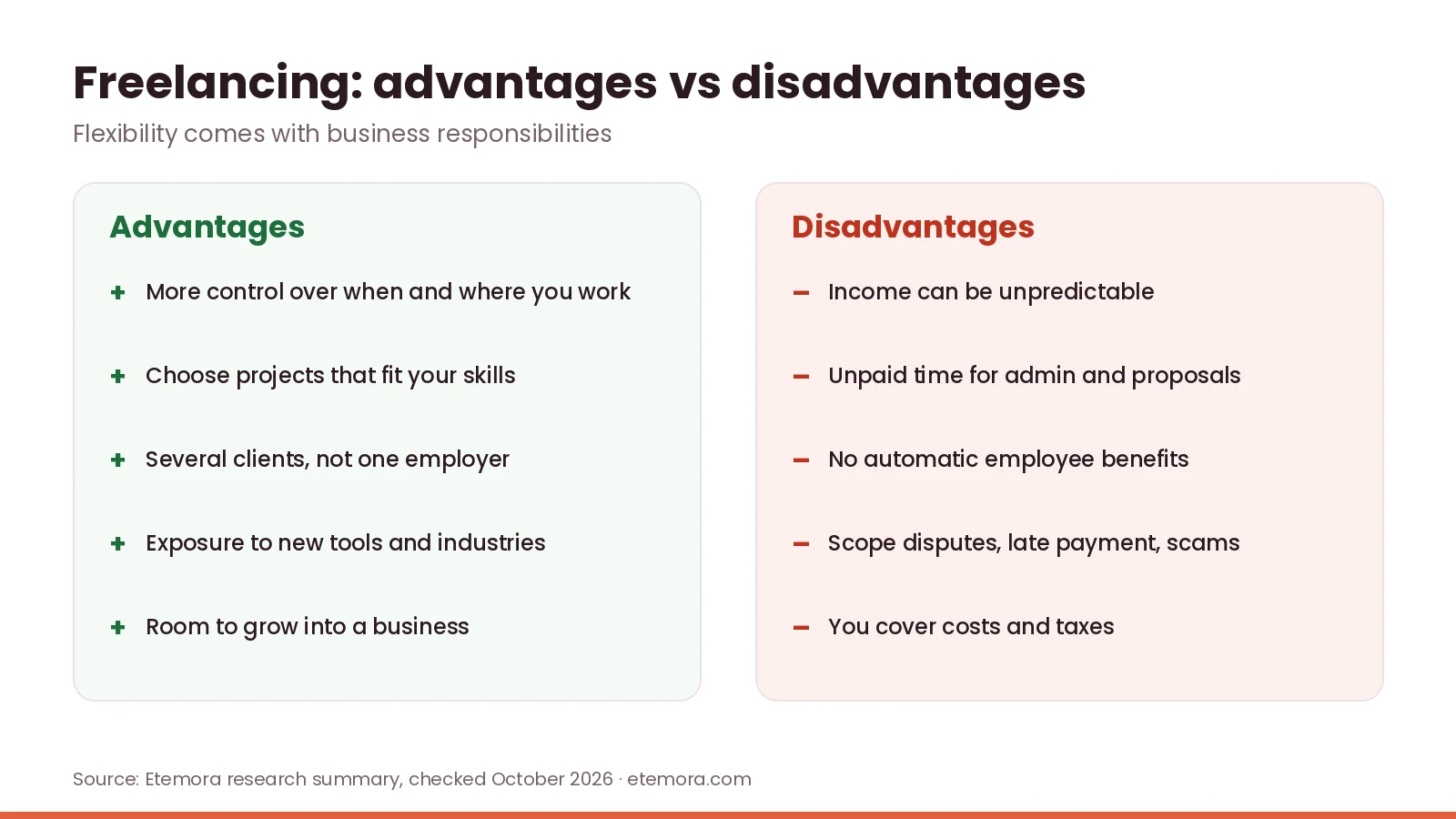
Advantages
- Flexibility: more control over when and where you work, within client needs.
- Choice of projects: seek work that fits your skills and goals.
- Multiple clients: less reliance on a single client.
- Skill development: exposure to new industries and tools.
- Business growth: room to build a specialised service or larger business.
Disadvantages
- Unpredictable income: clients can delay, cancel or stop needing you.
- Unpaid admin time: proposals, invoicing and bookkeeping take time.
- No automatic employee benefits: health cover, retirement savings and paid leave are on you.
- Client and payment risks: scope disputes, late payment and scams happen.
- Costs and taxes: equipment, software, fees and tax reduce what you keep.
Freelancing is not automatically easier than employment. You gain control over some decisions but become responsible for the business side of your work.
Common Freelancing Mistakes to Avoid
Knowing what is freelancing in theory is easy; these are the mistakes beginners most often make in practice.
Starting without a clear service
If clients cannot tell what you offer, they cannot decide whether you fit. Define a specific service and the result it delivers.
Accepting vague projects
Unclear instructions lead to endless revisions. Confirm what is included, what counts as extra and how changes affect price or deadline.
Ignoring platform fees
What a client pays is not always what you receive. Read the platform’s current fee and withdrawal policies before setting prices, and check direct payment providers’ charges too.
Working without written terms
Even a short written agreement reduces confusion about scope, deadlines, ownership, revisions and payment.
Trusting every job offer
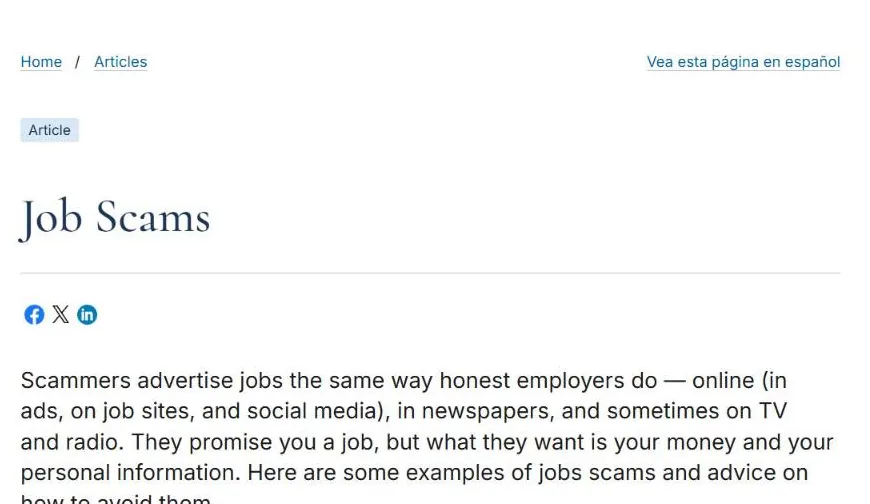
The FTC’s job scams guidance warns that scammers advertise jobs the same way honest employers do, and says not to pay for the promise of a job. It also describes fake check scams, where a “new employer” sends a check, asks for part of the money back and the check later bounces. Verify clients, keep communication documented and follow platform payment rules.
Promising results you cannot control
Promise agreed deliverables and professional effort, not outcomes outside your control. An SEO freelancer, for example, cannot honestly guarantee a specific Google ranking by a certain date.
How to Choose the Right Freelancing Path
Before committing, weigh these six factors:
- Your existing skills: start with something you can deliver competently.
- Market demand: look for evidence that clients buy the service and what they expect.
- Your financial situation: plan how you will cover expenses when work is limited, ideally with a buffer.
- Your working style: freelancing needs independent planning, client communication and self-motivation.
- Client acquisition: decide whether you prefer marketplaces, networking, outreach or a mix.
- Legal and tax requirements: check registration, contract, invoicing, data protection and tax rules where you live.
If you would rather have employment than independent projects, explore remote job websites. If your wider goal is earning online, our guide to making money online compares freelancing with other models, including affiliate marketing.
How We Compared
This guide to what is freelancing is a research-based explainer; we did not run hands-on tests. It draws on IRS guidance on independent contractors, worker classification and self-employment tax, Upwork’s freelancer pricing page, service-fee help article and beginner resources, and FTC consumer advice on job scams. Sources were reviewed in October 2026. Legal, tax, platform and payment rules change, so check current official guidance before you act. Read more about how we review.
Final Verdict: What Is Freelancing?
So, what is freelancing? It is a way to earn money by offering your skills independently to clients under agreed terms. It can give you more control over projects and schedule, but it also means handling client acquisition, pricing, deadlines, expenses and taxes.
You do not need a large business on day one. Choose one service, create a few honest samples, define a clear offer and approach suitable clients. Start with manageable projects, document agreements and improve as you learn what clients need.
- Best fit for beginners: one skill and a small portfolio before applying for paid work
- Best for people seeking flexibility: project-based work that fits your schedule
- Best for experienced professionals: a specialised service that solves a clear business problem
- Best for testing a side income: a limited workload with realistic expectations
- Best for building an independent business: repeat clients and careful tracking of income, costs and profit
Ready to see where clients post opportunities? Compare platforms first: service categories, fees, payment policies and competition all differ.
Choosing a platform?
Compare the Best Freelancing Platforms →Frequently Asked Questions
What is freelancing in simple words?
What is freelancing in simple words? It means working independently and getting paid by clients for services or projects, such as writing, design, web development, video editing or admin support. Instead of relying on one employer for a salary, freelancers usually find clients and agree on work and payment terms themselves.
How does freelancing work for beginners?
Beginners can choose one useful skill, create sample work and define a clear service. They then look for clients through freelance platforms, professional networks, referrals or outreach, and agree on scope, deadline, price, revisions and payment before starting.
Can I start freelancing with no experience?
Yes, if you can provide a useful service. Create sample projects, label practice work honestly and apply for assignments that match your current level. A portfolio, clear communication and met deadlines help you earn trust.
How do freelancers get paid?
Freelancers are paid under the terms agreed with clients: hourly billing, fixed project fees, milestone payments or recurring retainers. Payment may run through a platform, bank transfer or another agreed method. Platform fees, processing costs and taxes reduce the amount kept; Upwork’s service fee, for example, ranges from 0% to 15% per contract.
Which freelancing skills are best for beginners?
It depends on your abilities and the clients you can reach. Options include writing, basic graphic design, video editing, virtual assistance, translation and website support. Research what clients need first; no skill guarantees work.
Is freelancing a real job?
Yes, freelancing is a legitimate way to earn income by providing services. Freelancers may work part-time, full-time or alongside other employment, and still need to keep records and follow laws, tax rules, contracts and platform policies.
How much money can a freelancer earn?
Earnings vary by skill, experience, location, demand, pricing, workload and the ability to find paying clients. Gross revenue is not take-home income, because fees, expenses and taxes apply. Research rates for your specific service rather than relying on broad income promises.
Is freelancing better than a full-time job?
Neither is automatically better. Freelancing offers more choice over clients and projects, but income can fluctuate and there are no employer benefits. Employment usually offers a more predictable paycheck. Compare your financial needs, schedule and tolerance for uncertainty.
Do freelancers have to pay taxes?
Usually, yes, but rules depend on where you live, your business structure and income. In the United States, the IRS says you generally must file if net self-employment earnings are $400 or more, self-employment tax is 15.3%, and estimated taxes are generally paid quarterly. Check current guidance or a qualified tax professional.
Where can I find freelance jobs online?
Look on freelance marketplaces, professional networks, remote-work websites and industry communities, or contact businesses directly and build a portfolio site. Compare platform fees, payment rules, competition and project types before deciding where to focus.
Sources
- IRS: Independent contractor (self-employed) or employee?
- IRS: Independent contractor defined
- IRS: Self-employment tax (Social Security and Medicare taxes)
- IRS: Self-Employed Individuals Tax Center
- IRS: Form 1099-NEC and independent contractors
- Upwork: What Is Freelancing? Basics and Popular Jobs in 2026
- Upwork: How to Become a Freelancer in 2026
- Upwork: Freelancer pricing plans
- Upwork Help: Learn about the Freelancer Service Fee
- FTC Consumer Advice: Job Scams
Related articles you may like
 Make Money OnlineSide Hustles That Pay Daily: 10 Legit Ways to Get Paid Fast
 FreelancingFiverr Review for Freelancers (2026): Fees, Levels and Payouts
 Make Money OnlineRemote Jobs With No Experience: 10 Real Options for 2026
 Make Money OnlineRemote Jobs for College Students: 12 Ideas, Tips and Scam Checks
 FreelancingWhat Is Affiliate Marketing? Complete 2026 Beginner Guide
 FreelancingBest Freelance Websites for Developers: 6 Proven Picks