
How to Start Freelancing: 7 Proven Steps in 2026
 By M. Zaid
- Updated October 1, 2026
- 19 min read
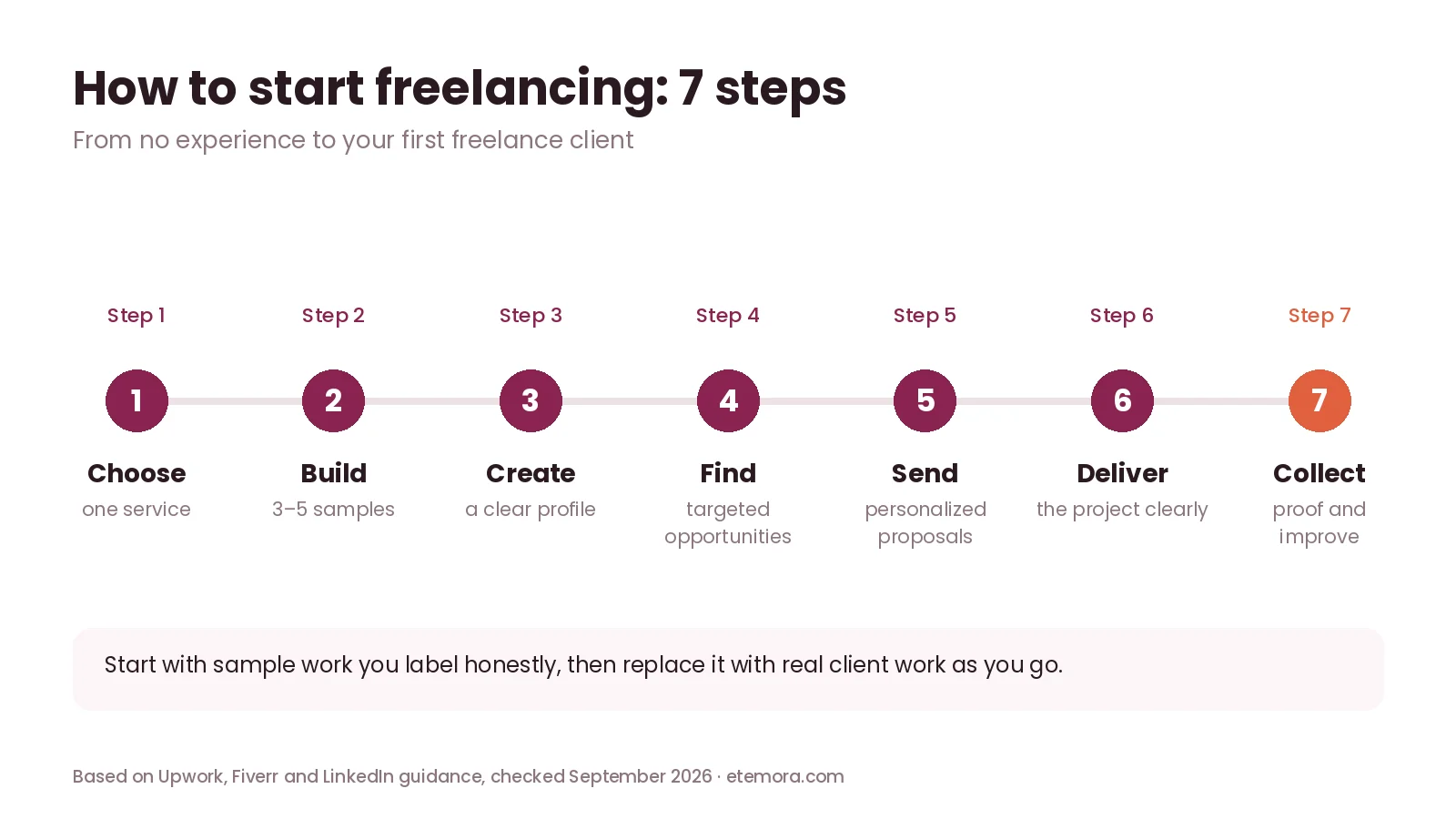
- 7 Steps to Start Freelancing
- 1. Choose One Freelance Skill
- 2. Build a Portfolio Without Clients
- 3. Create a Clear Freelance Profile
- 4. Decide What to Charge
- 5. Find Your First Clients
- 6. Write Better Proposals
- 7. Deliver the First Project
- A Simple First-Week Plan
- How to Choose Your Platform
- Common Beginner Mistakes
- After Your First Client
- Final Verdict
- FAQs
If you want to know how to start freelancing without previous clients or a formal work history, the good news is that you do not need to begin with a long resume. You need a sellable skill, proof that you can perform it, a clear service offer and a practical way to reach potential clients.
This guide explains how to choose your first freelance service, create a portfolio without client work, set an initial price, find legitimate opportunities and avoid common beginner mistakes. It also covers Upwork, Fiverr, LinkedIn and direct outreach so you can choose a starting path that fits you.
Quick Answer
To start freelancing with no experience, choose one specific service, create several strong sample projects, build a simple portfolio, create profiles where clients search for freelancers and apply only to relevant opportunities. Your first goal should be proof and experience, not trying to offer every service at once.
Prefer applying to projects with proposals?
See Upwork →7 Steps on How to Start Freelancing With No Experience
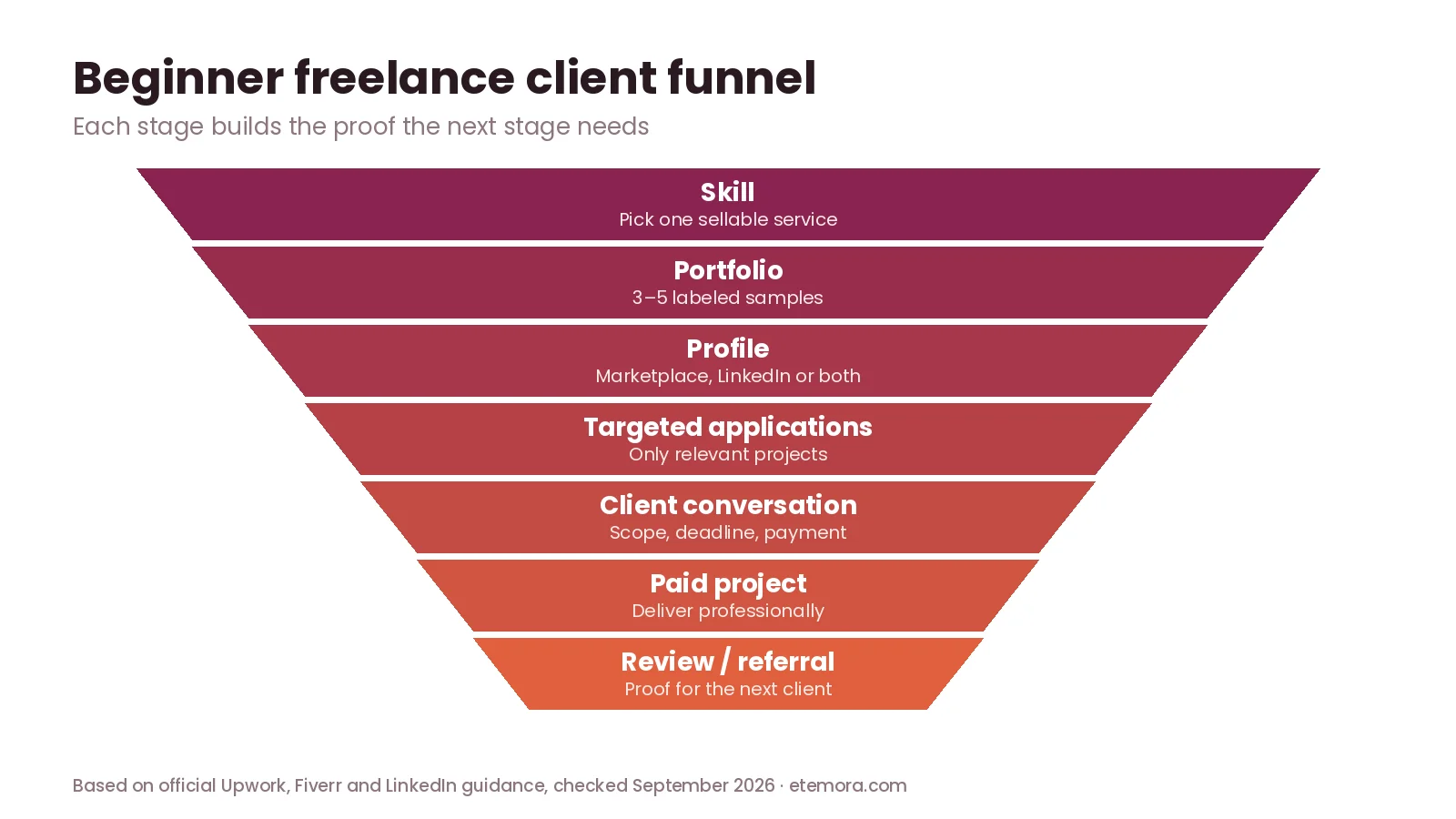
Here is how to start freelancing step by step. The process below takes you from choosing a skill to landing and delivering your first paid project. Each step builds the proof the next one needs.
1. Choose One Freelance Skill
The first step in how to start freelancing is deciding what you will sell. Do not start with “I can do anything.” Clients need to understand quickly what you actually provide.
Start with a skill you already have or one you can develop to a basic professional level. Common beginner-friendly categories include writing, graphic design, video editing, virtual assistance, social media management, web design, data-related tasks, customer support and basic digital marketing. Upwork’s 2026 freelancer guide similarly recommends defining your service and ideal client before looking for projects.
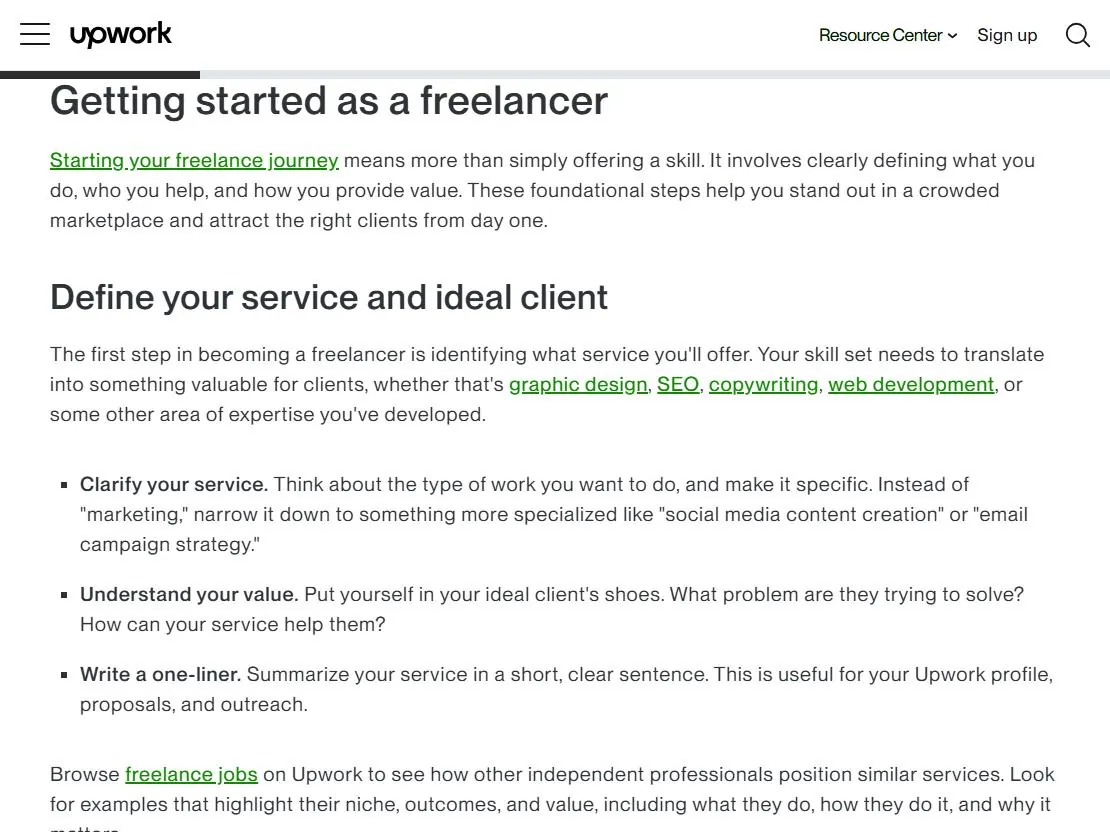
A useful formula is: “I help [type of client] with [specific service].” For example:
- I write blog articles for small technology websites.
- I create social media graphics for local businesses.
- I edit short-form videos for creators.
- I build simple WordPress websites for small businesses.
- I organize email and administrative tasks for busy professionals.
The narrower offer is usually easier to explain than a profile containing ten unrelated skills.
How to choose your first skill: make a list of things you can already do reasonably well, then identify which of those skills solves a business problem.
- Being “good at Canva” is a skill. Creating Instagram graphics for restaurants is a service.
- Being “good at English” is broad. Writing SEO blog posts for software companies is a clearer commercial offer.
- Being comfortable with spreadsheets is useful. Cleaning and organizing small-business spreadsheets is a service.
Your first service does not have to become your permanent career. It is simply the starting point.
2. Build a Portfolio Without Client Experience
This is where many beginners researching how to start freelancing get stuck. They think a portfolio requires previous clients, but a portfolio can demonstrate what you are capable of producing.
You can create sample projects specifically for your portfolio. Upwork’s guide suggests creating your own projects when you don’t have past client work, such as redesigning a well-known website, building a sample marketing campaign or writing articles in your niche.
- If you want to become a freelance writer, create three sample articles.
- If you want to become a graphic designer, create several fictional branding or social media projects.
- If you want to edit videos, create sample edits using footage you have permission to use.
- If you want to become a virtual assistant, create examples of spreadsheets, schedules, research documents or administrative workflows.
Do not present fictional projects as paid client work. Label them clearly as sample, personal or concept projects.
What should a beginner portfolio contain? A simple portfolio can include:
- Your service.
- Three to five relevant samples.
- A short explanation of each sample.
- The problem the sample addresses.
- What you delivered.
- Your contact or profile link.
You do not need a complicated website at the beginning. A clean portfolio document or an online portfolio can be enough. The goal is to answer one question for a potential client: “Can this person produce the type of work I need?”
3. Create a Clear Freelance Profile
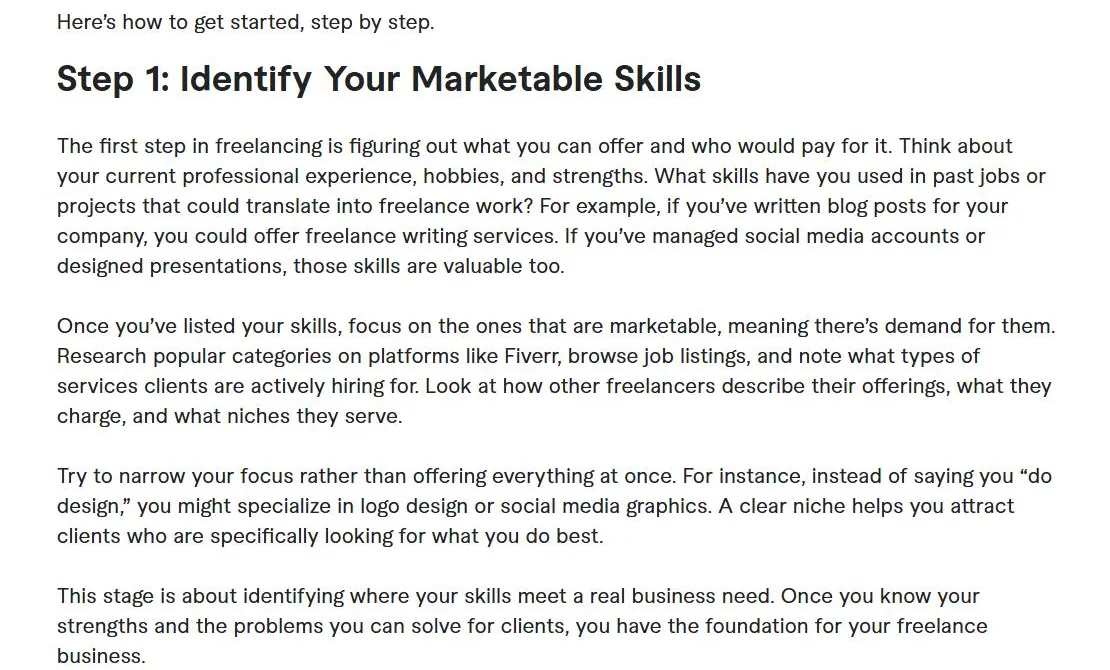
Your profile should explain what you do rather than tell your entire life story. Start with a direct headline. Instead of “Freelancer | Hardworking | Creative | Motivated”, try “SEO Blog Writer for Technology and SaaS Companies” or “Short-Form Video Editor for YouTube and Social Media”.
Then explain the service, the type of client you want to help and what the client receives.
Upwork describes the freelancer profile as the central presentation of your skills, experience and portfolio, and recommends completing it before you start applying, according to Upwork Support.
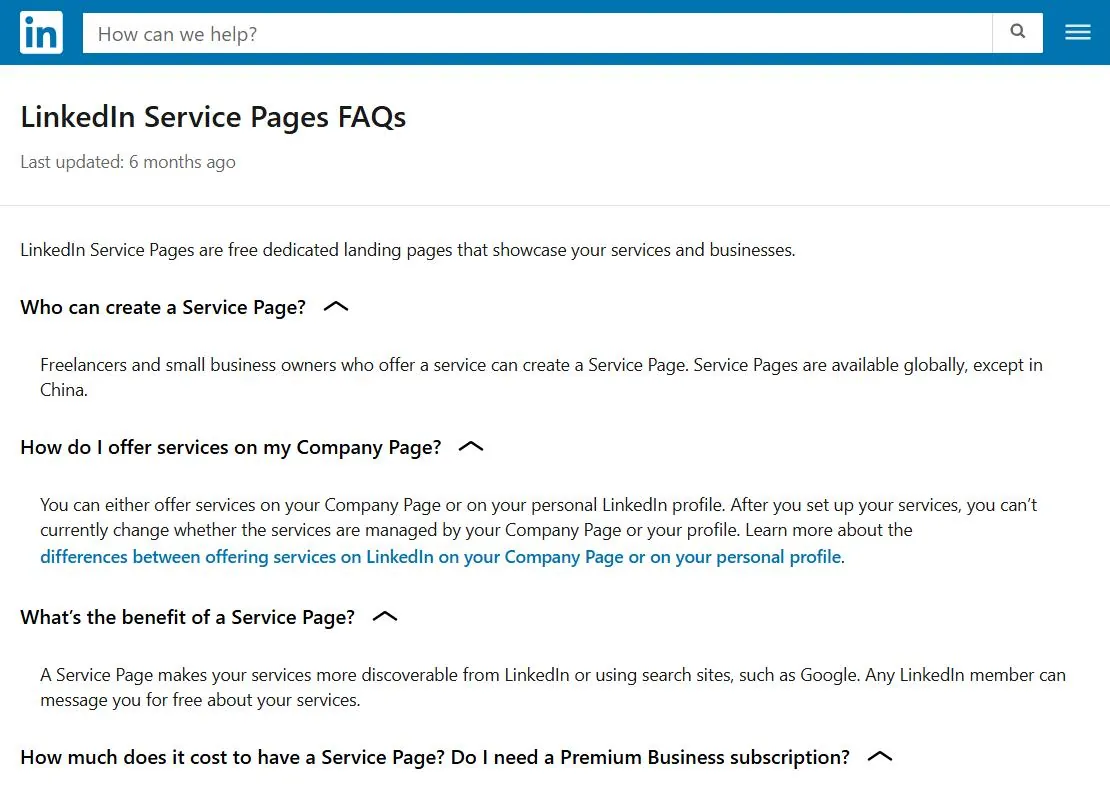
Fiverr uses a different model in which freelancers create service listings, while LinkedIn lets freelancers create dedicated Service Pages. LinkedIn says Service Pages are free and make your services more discoverable, and any LinkedIn member can message you for free about them.
Prefer packaging your service as a listing buyers can find?
See Fiverr →Do you need a personal website? No. A website can help later, but it is not a requirement for getting your first freelance project. You can start with a marketplace profile, a LinkedIn Service Page, a portfolio document or another suitable portfolio platform. Once you have real client work and stronger case studies, a personal website becomes more useful.
4. Decide What to Charge
Pricing is one of the hardest parts of how to start freelancing, especially when you have no reviews. There is no universal beginner rate because pricing depends on the service, market, complexity, location, client type and level of responsibility.
Avoid choosing a price simply because another freelancer charges it. Instead, research current rates for your specific service and decide whether you want to charge hourly, per project, per deliverable or through packages. To find a starting rate that covers tax, business costs and unpaid time, try our free freelance hourly rate calculator.
Upwork’s guide suggests checking what other freelancers in your category charge, factoring in your expenses and experience, and notes that many freelancers start with a lower rate and raise prices as they gain traction.
For example, a beginner writer could price an article as a project rather than charging by the hour. A designer might price a defined set of social graphics. A video editor might charge per video or package.
Remember platform fees. If you use a marketplace, the amount the client pays may not equal what you receive. Upwork’s freelancer service fee ranges from 0% to 15% per contract. The fee is shown when a client sends you an offer or when you submit a proposal, and it is locked in for the life of that contract, according to Upwork’s fee page (checked September 2026). Build platform fees into your pricing when they apply.
5. Find Your First Freelance Clients
Creating a profile is only the setup when you learn how to start freelancing. You also need a system for finding potential clients. There are four practical starting routes.
Freelance marketplaces. Platforms such as Upwork and Fiverr connect freelancers with clients through established marketplaces. On Upwork, freelancers search for relevant projects and submit proposals; its first-job guidance favors targeted, personalized proposals over generic applications. Fiverr works differently: you create service listings, and buyers discover and purchase your services. For a broader look, see our comparison of the best freelancing platforms, or our Upwork vs Fiverr breakdown if you are choosing between the two biggest marketplaces.
LinkedIn. LinkedIn can be useful if your target customers are businesses and professionals. Its Service Pages are free and let potential clients contact you, and LinkedIn says they are available globally except in China. Make your service obvious on your profile, publish useful examples, explain the problems you solve and connect with people who fit your target market.
Direct outreach. You can also contact businesses directly. If you offer website design, for example, identify small businesses with outdated websites and send a short, personalized message explaining what you noticed and what service you provide. Do not send hundreds of identical messages; personalization shows you understand the business.
Referrals and personal networks. Your first client does not have to come from a freelancing platform. Friends, former colleagues, local businesses, community groups and professional contacts may know someone who needs your service. Tell people exactly what you offer: “I’m looking for freelance work” is less useful than “I create short-form videos for small businesses.”
6. Write Better Proposals
When you apply for freelance work, do not repeat the job description in different words. Start with the client’s problem. A simple proposal structure is:
“Hi [Name], I saw that you need [specific task]. I can help by [specific approach]. I would deliver [specific result or deliverable] within [reasonable timeframe]. I’ve included a relevant sample here: [portfolio link].”
Then ask one useful question if something important is unclear. Keep the proposal short enough to read quickly — the client mainly wants to know whether you understand the assignment and can deliver it.
Upwork’s first freelance job tips also stress personalized proposals and a clear value proposition.
Do not claim experience you do not have. If you have sample work instead of paid client work, say so.
Ready to send your first tailored proposal?
See Upwork →7. Deliver the First Project Professionally
Getting the first client is only part of how to start freelancing as a career. Before work begins, confirm the scope, deliverables, deadline, revision policy and payment arrangement. When you work with a client directly rather than through a platform, send a clear invoice with the agreed amount and due date — our free invoice generator makes one as a PDF. Then keep communication organized.
If the client asks for something outside the original scope, clarify whether it is included before doing substantial additional work.
Your first projects can show you where your process was unclear. Use that to improve your service description, proposal and pricing. Once you have legitimate client work, ask whether the client is comfortable providing a review or testimonial where the platform and applicable rules permit it. Over time, your portfolio can shift from sample projects toward real client work.
How to Start Freelancing With No Experience: A Simple First-Week Plan
You do not need to build an entire freelance business in one day. A practical first-week plan could look like this:
| Day | Focus | What to do |
|---|---|---|
| Day 1 | Choose your service | Pick one service and one initial client type. |
| Day 2 | Research the market | Study existing freelance profiles and job posts to see what clients ask for and how services are described. |
| Day 3 | Create your samples | Produce two or three strong portfolio pieces that match the service you want to sell. |
| Day 4 | Build your profile | Create your Upwork, Fiverr, LinkedIn or other profile and make the service immediately clear. |
| Day 5 | Prepare your proposal | Write a short proposal structure you can customize for each opportunity. |
| Day 6 | Start outreach | Apply to relevant projects or contact potential clients directly. |
| Day 7 | Review and improve | If nobody seems interested, check whether the service, portfolio, target client or message needs work. |
If you get no response in the first week, do not immediately conclude that freelancing does not work. Adjust one thing at a time and keep going.
How to Choose Your Freelancing Platform
Where you start matters less than whether your clients are there. Use these seven checks when you decide how to start freelancing on a specific platform.
- Look at where your clients already search. Different clients use different channels. A designer may find work through marketplaces, LinkedIn or direct outreach, while a local business consultant may depend more on professional networking.
- Compare the business model. Some platforms are proposal-based; others rely on service listings and marketplace discovery. Understand how clients reach you before committing to one platform.
- Check fees before setting prices. Platform fees reduce your net earnings. Upwork’s freelancer service fee currently ranges from 0% to 15% per contract, so always check each platform’s current fee documentation before finalizing your rate.
- Consider how you want to build your reputation. A marketplace can provide reviews and a visible work history. LinkedIn can help you build a broader professional presence. Over time you can use several channels.
- Match the platform to your service. A platform is useful only if the clients there need what you sell.
- Keep ownership of your portfolio. Keep copies of your samples, client-approved work and business records in systems you control, not only inside one marketplace profile.
- Avoid paying simply for the promise of work. The FTC warns that job scams may ask for money for training, starter kits or certifications, and that honest employers will never ask you to pay to get a job.
Common Beginner Mistakes
Most people who struggle when they learn how to start freelancing make one of these avoidable mistakes.
Trying to sell too many services. A profile offering writing, design, SEO, video editing, web development and virtual assistance makes it hard for a client to see what you specialize in. Start narrower.
Waiting for a perfect portfolio. You can improve your portfolio while searching for clients. Do not spend months preparing without ever offering your service.
Competing only on price. Being the cheapest freelancer is not a sustainable position. Make the scope clear, communicate well and show relevant proof instead.
Sending generic proposals. A generic proposal tells the client very little about whether you understand their problem. Personalize the first few lines.
Accepting unclear projects. If you do not understand the deliverables, deadline or revision expectations, ask before accepting the project.
Paying a scammer. Never send money to someone who promises guaranteed work or income. The FTC’s work-from-home scam alert warns about upfront payment requests, fake checks and promises of thousands of dollars a month for little time and effort.
Ignoring taxes and records. Freelancing creates income and expenses that should be tracked. For US freelancers, the IRS says you must report all income on your tax return, even without a Form 1099, and must file if you have net self-employment earnings of $400 or more — even from a side, part-time or temporary job. It also recommends keeping records and receipts through the year. Tax rules vary by country, so freelancers outside the US should check local requirements or consult a qualified tax professional.
What to Do After Your First Client
Once you know how to start freelancing, your first project should become a learning opportunity. Write down what the client requested, how long the work took, which parts were difficult and which questions came up repeatedly. Then improve your process.
You might turn one service into a package, raise your price after building a stronger track record, or discover that a particular client type is easier for you to serve. AI assistants can also speed up research, drafting and admin work once you know your process — see our guide to the best AI tools for work.
As you build legitimate experience, replace sample pieces with real work where you have permission to display it, collect reviews where permitted, and gradually focus on the projects that fit your strengths. If you want to look beyond marketplaces, our list of the best remote job websites covers other ways to find remote work, and our guide on how to make money online shows where freelancing fits among other income options. You can browse everything in our freelancing guides.
How we put this together: this is a research-based guide; we did not run hands-on tests. We reviewed official guidance and documentation from Upwork, Fiverr and LinkedIn, consumer guidance from the US Federal Trade Commission and tax information from the IRS. Platform details were checked in September 2026 and can change, so re-check them before you commit.
Final Verdict: How to Start Freelancing With No Experience
How to start freelancing is less about finding a secret platform and more about creating a clear service, producing credible proof and repeatedly putting that offer in front of suitable clients. The simplest path is:
- Choose one service.
- Pick a specific client type.
- Create three to five relevant samples.
- Build a focused profile.
- Apply to suitable projects.
- Personalize your proposals.
- Deliver the first project professionally.
- Turn legitimate experience into stronger proof.
- Best fit for beginners using project proposals: Upwork
- Best for packaged services and marketplace listings: Fiverr
- Best for professional networking and direct inquiries: LinkedIn
- Best for building a broader freelance business: a mix of marketplaces, networking and direct outreach
- Best for avoiding unnecessary costs: free profiles and portfolio options before paid courses or programs
Frequently Asked Questions
Can I start freelancing with no experience?
Yes, you can start freelancing without previous paid clients. Build sample work first, choose a specific service and use those samples to demonstrate your ability. Upwork and Fiverr both publish beginner guidance built around focused services, profiles, portfolios and targeted client acquisition.
How to start freelancing with no experience?
Choose one marketable skill and turn it into a specific service. Then create several relevant samples, build a professional profile, choose suitable client-acquisition channels and begin applying or reaching out. Your first objective is credible proof, not looking like an experienced freelancer.
What is the easiest freelance job to start with?
There is no single easiest freelance job for everyone. Beginner-friendly options include writing, virtual assistance, graphic design, video editing and administrative work, but the right choice depends on your existing skills and what you can demonstrate.
Can I freelance without a degree?
Yes, many freelance services can be sold without a college degree. Clients usually want evidence that you can do the specific work, so a relevant portfolio can matter more than an unrelated qualification. Some regulated or specialized services may have separate education, licensing or certification requirements.
How do I get my first freelance client?
Create a small portfolio, choose a specific client type and pursue relevant opportunities rather than applying everywhere. Personalized proposals, clear service descriptions and relevant samples make your offer easier to evaluate.
Should I start freelancing on Upwork or Fiverr?
Both can be starting points, but they work differently. Upwork centers on finding projects and submitting proposals, while Fiverr lets freelancers create service listings that buyers discover. Choose based on whether you prefer actively applying or packaging services for marketplace discovery.
How much should a beginner freelancer charge?
There is no universal beginner rate. Research current pricing for your exact service, consider the scope and complexity, account for platform fees where they apply and choose a rate you can explain. Many freelancers start lower and raise prices as they gain experience and reviews.
Do I need a website to start freelancing?
No. You can begin with a marketplace profile, a portfolio document, a LinkedIn Service Page or another professional profile. LinkedIn Service Pages are free, although some extra features need a Premium Business, Sales Navigator or Recruiter Lite subscription.
Is freelancing safe for beginners?
Freelancing can be legitimate, but beginners should watch for scams. The FTC warns about offers that require upfront payment, fake checks, requests for personal information and promises of large earnings for little work. Research unfamiliar clients and companies before sharing sensitive information.
Do freelancers have to pay taxes?
Generally yes, but the rules depend on where you live. In the US, the IRS says gig workers must report all income and may need to make quarterly estimated tax payments. Keep records of freelance income and business expenses, and check the rules that apply to you.
Sources
Disclosure: Some links on this page may be affiliate links. If you purchase through an eligible link, Etemora may earn a commission at no additional cost to you. Our editorial recommendations are not determined solely by commission. Learn more →
Related articles you may like
 FreelancingUpwork Fees Explained: Complete 2026 Guide
 FreelancingBest Remote Job Websites in 2026: 12 Platforms Compared
 FreelancingHow to Make Money Online in 2026: 15 Legit Ways & Platforms
 FreelancingUpwork vs Fiverr: Which Platform Is Right for Freelancers?
 FreelancingBest Freelancing Platforms in 2026: 10 Websites Compared
 SEO & MarketingBest SEO Tools in 2026: 12 SEO Tools Compared