
What Is a Domain Name? A Simple Guide for 2026
 By M. Zaid
- Updated October 12, 2026
- 21 min read

- How a Domain Name Works
- Parts of a Domain Name
- What Is a Top-Level Domain?
- Domain Name vs Web Hosting
- Domain Name vs URL
- What Is a Domain Registrar?
- What a Domain Name Is Used For
- How Much a Domain Name Costs
- How to Register a Domain Name
- How to Look Up a Domain
- Does a Domain Name Affect SEO?
- How to Choose a Good Domain Name
- Common Mistakes
- How We Compared
- Final Verdict
- FAQs
What is a domain name? It is the human-readable address people type into a browser to visit a website, such as example.com. Instead of remembering a numerical IP address, visitors can use a name that is easier to recognize, say and share.
A domain name is one of the basic building blocks of a website, but it is not the website itself. You can register a domain before building anything, connect it to a hosting service later, and use the same name for other services such as email. This guide answers what is a domain name in plain English: how it works, what its parts mean, how it differs from hosting and URLs, what it costs, and how to choose and register one.
Quick answer: A domain name is a readable internet address that identifies a domain within the Domain Name System (DNS). DNS records connect the name to the services you choose, such as a website host or an email provider. For example, example.com is a domain name; the website files, the hosting infrastructure and the email service are separate parts you set up and connect to it.
What Is a Domain Name and How Does It Work?
To understand what is a domain name, start with the job it does. A domain name gives people a recognizable way to reach an internet resource. It is part of the Domain Name System, usually called DNS. ICANN, the organization that coordinates the DNS, explains that every computer on the internet has a numerical IP address, and that DNS lets people use a familiar string of letters (the domain name) instead of that hard-to-remember number.
Imagine you want to visit a website called brightbooks.com. You type that name into your browser instead of a numerical IP address. DNS helps the browser find the destination configured for that domain, and the browser then requests the website or service from that destination.
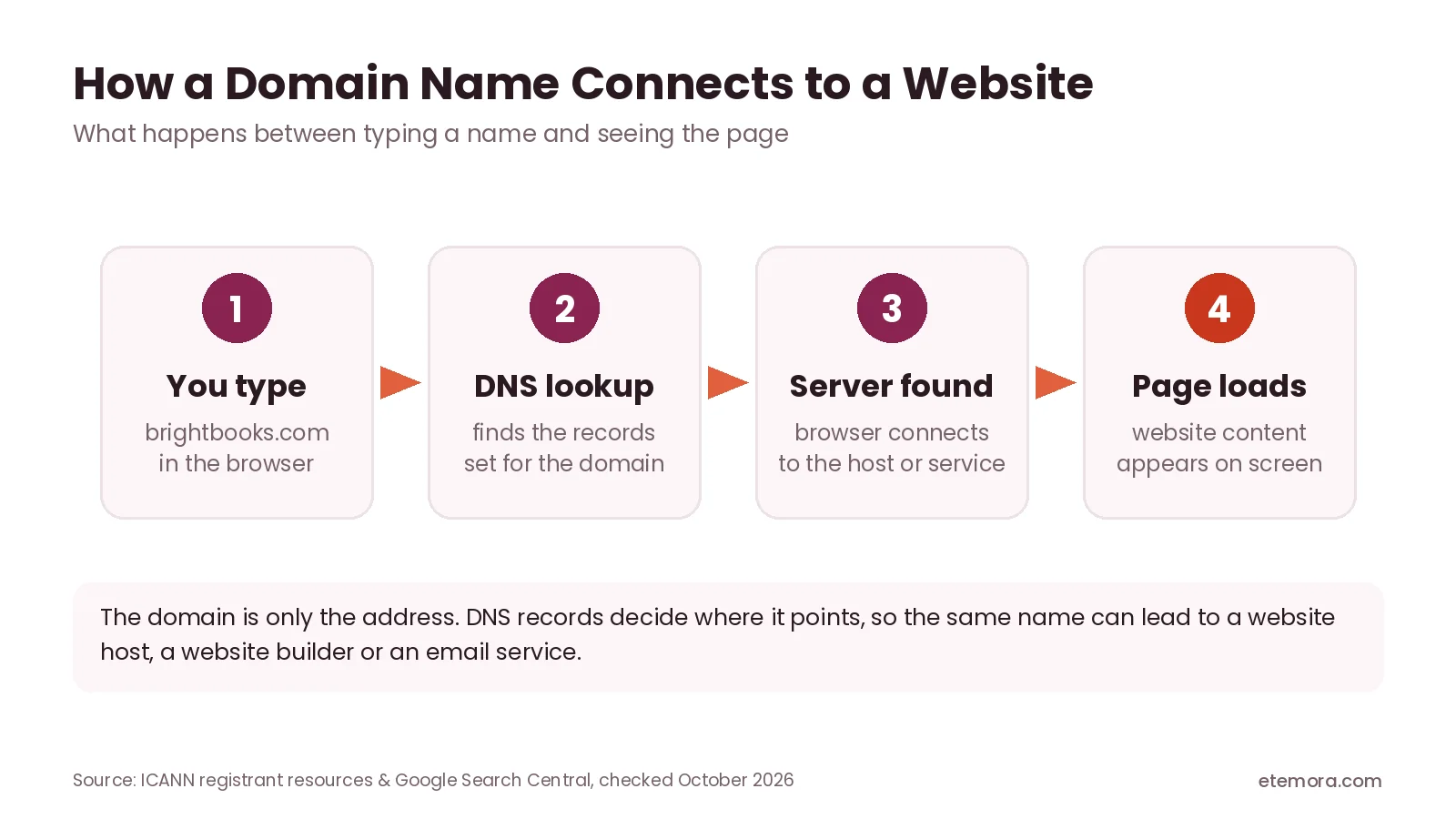
The exact DNS records and infrastructure vary by setup, but the answer to “what is a domain name” stays the same: it is the name, not the server. A domain might point to a web host, a website-building platform, an email service or another internet service. That is why changing your hosting company does not mean changing your domain: you simply update the DNS settings so the same name points to the new destination.
A simple example
Consider www.brightbooks.com:
- brightbooks.com is the registered domain name.
- www is a subdomain commonly used for a website.
- DNS records specify how the domain and subdomain connect to services.
- The server or platform delivers the requested page.
Registering a domain does not automatically create a website. You need to connect it to a service that provides the website or other resource you want visitors to reach.
What Are the Parts of a Domain Name?
Once you know what is a domain name, the next step is reading one. A domain name can contain several parts, separated by dots. Understanding them makes it easier to choose a name and configure it correctly. ICANN uses the example whois.icann.org: “org” is the top level, “icann” is the second level and “whois” is the third level. Each level to the left sits under the one to its right.

Take shop.brightbooks.com as a second example:
- com is the top-level domain (TLD).
- brightbooks is the second-level label registered under .com.
- shop is a subdomain of brightbooks.com.
- The complete hostname shop.brightbooks.com identifies that particular host within the domain’s DNS structure.
A domain can have many subdomains, such as blog.brightbooks.com, support.brightbooks.com or mail.brightbooks.com, and each one can point to a different service. ICANN notes that when you register a domain name you are creating a new “realm” in the DNS, and within that realm you set the rules and create the subdomains yourself.

What Is a Top-Level Domain?
A top-level domain is the ending of a domain name, such as .com, .org or .net. Country-code extensions include endings such as .uk and .in, while other extensions serve particular communities, industries or branding preferences. The full, official list lives in the IANA Root Zone Database.
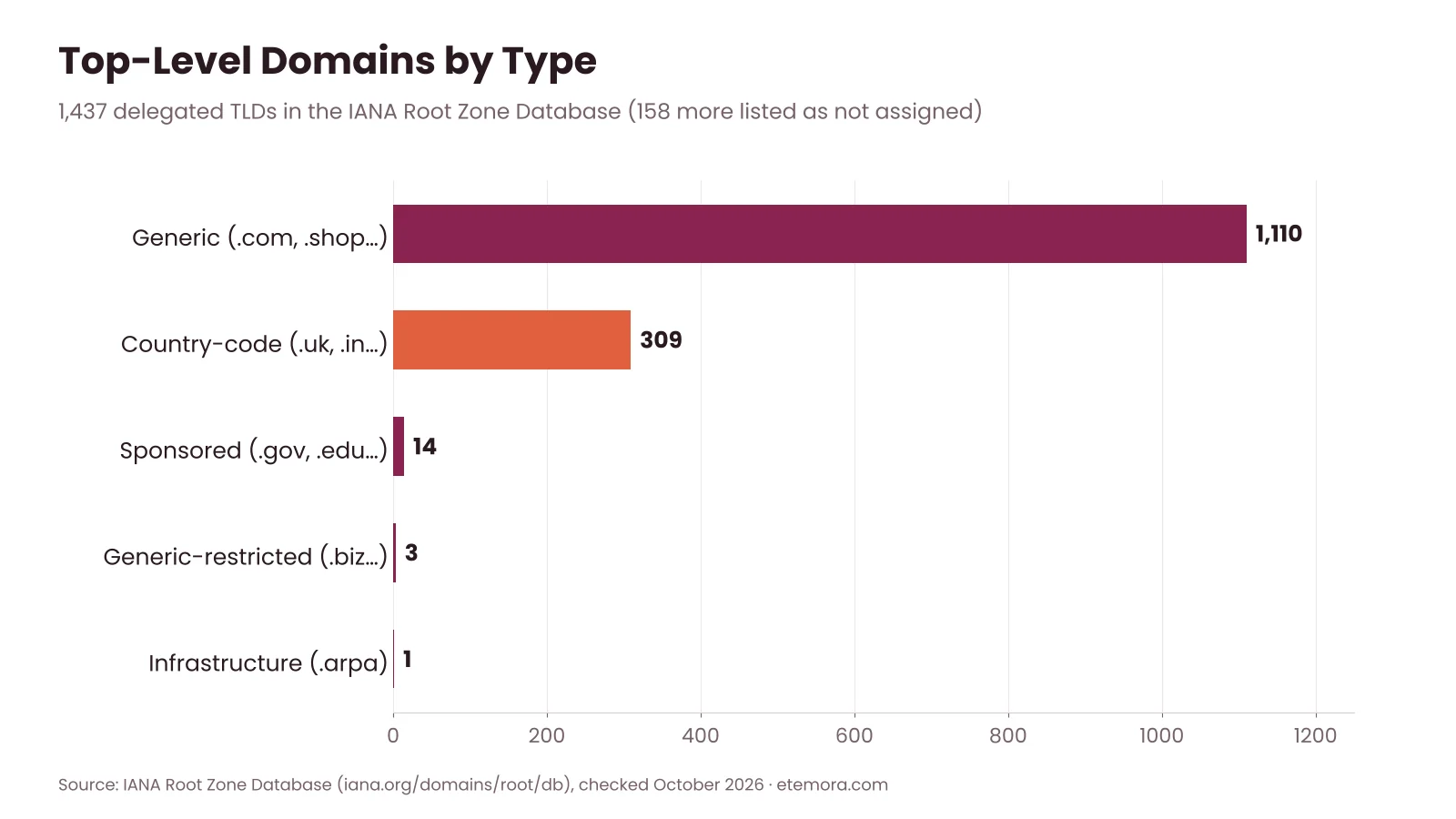
When we counted the database in October 2026, it listed 1,437 delegated TLDs: 1,110 generic, 309 country-code, 14 sponsored, 3 generic-restricted and 1 infrastructure domain (.arpa), plus 158 entries marked as not assigned. That is a lot of choice, but most website owners only seriously consider a handful.
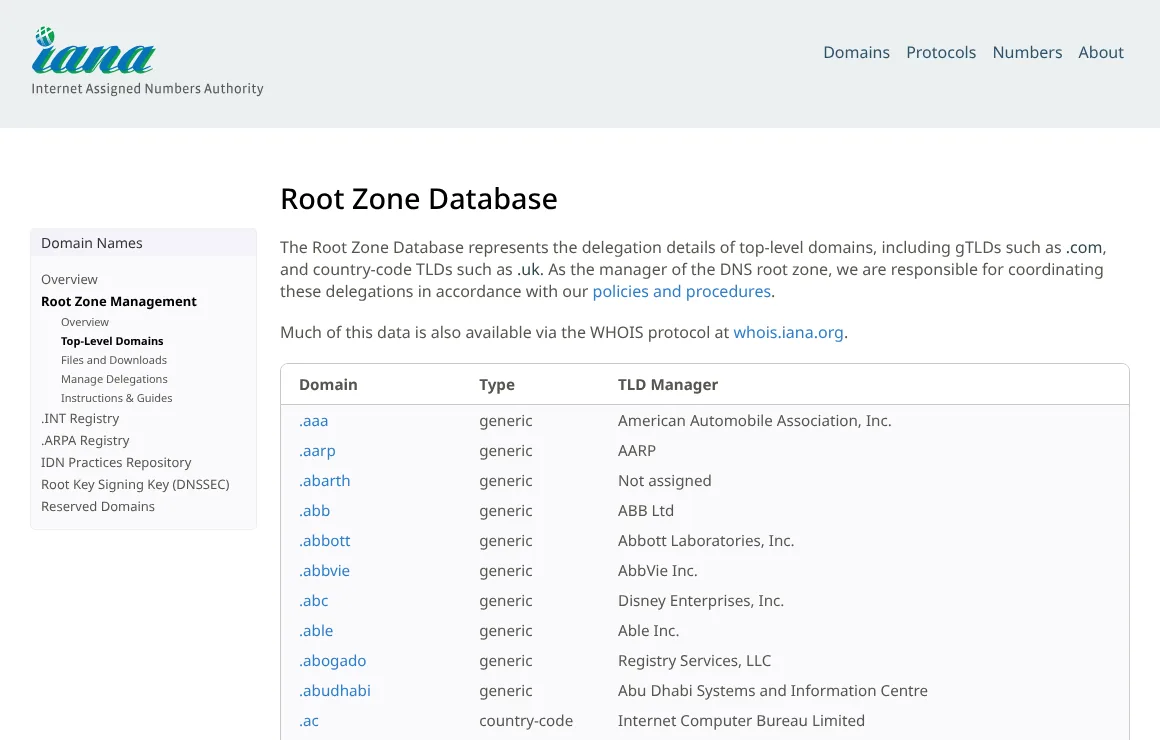
The right extension depends on your audience, brand and intended use. A commercial website may choose .com, while an organization might prefer an extension that reflects its identity. An extension alone does not guarantee credibility or better search rankings. If you are weighing the most popular options, our comparison of .com vs .net vs .io vs .co goes into more detail.
What Is the Difference Between a Domain Name and Web Hosting?
Many beginners asking what is a domain name are really asking how it differs from hosting. A domain name and web hosting do different jobs. The domain is the address visitors use, while hosting provides the infrastructure that stores or serves your website’s files and applications. If you want the full picture of the hosting side, read our explainer on what web hosting means.
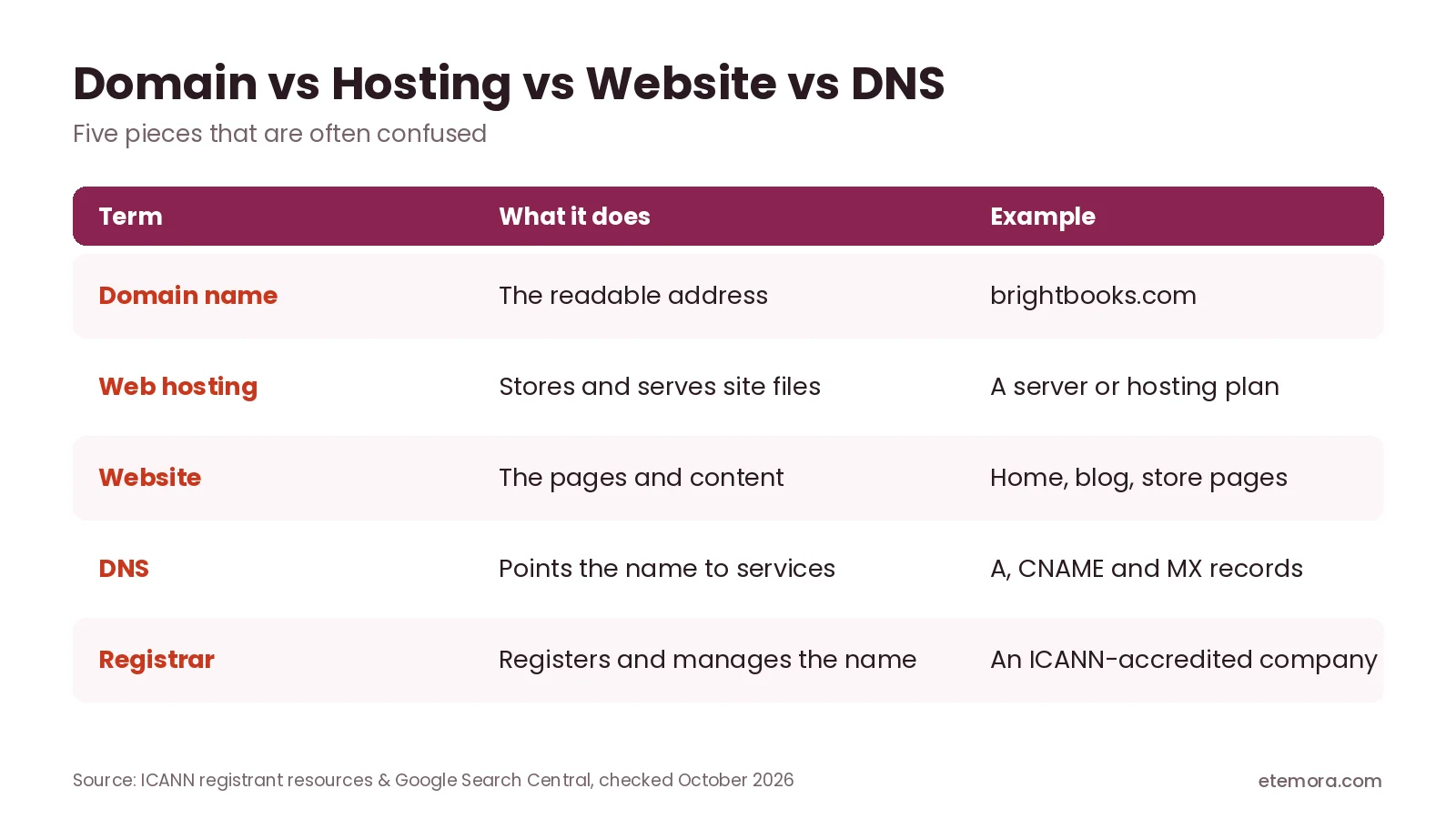
| Term | What it does | Example |
|---|---|---|
| Domain name | Gives visitors a readable address | brightbooks.com |
| Web hosting | Stores or serves website files | A server or hosting plan |
| Website | Provides pages, content and features | Home page, blog, online store |
| DNS | Connects a domain to the relevant services | Records pointing the domain to a host |
| Registrar | Lets you register and manage a domain | A company that sells domain registrations |
You can register a domain and leave it unused. You can also build a website on a platform-provided address before connecting your own domain. ICANN’s registration FAQ makes the same point from the other side: you are not required to buy hosting from the company where you registered the domain, and a domain on its own does not become a working website until you set up the services behind it.
Domain Name vs URL: What Is the Difference?
Another common question after “what is a domain name” is how it differs from a URL. A domain name is the main readable name, such as example.com. A URL (uniform resource locator) is the full address of one specific resource. It can include the protocol, the domain, a path and sometimes query parameters, for example https://example.com/blog/article.
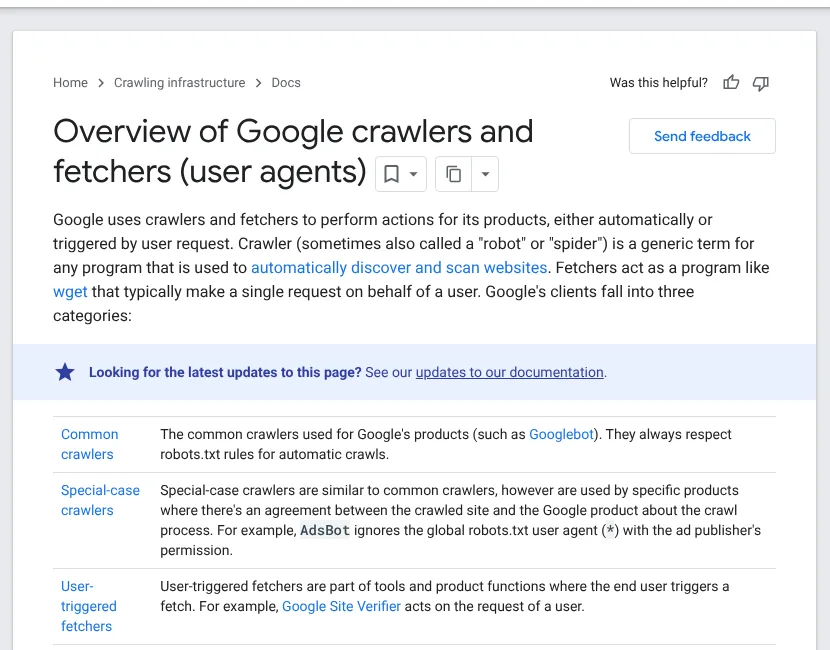
In other words, one domain appears inside many different URLs. Every page, image and file on your site has its own URL, but they all share the same domain. Search engines work with these URLs: Google’s documentation describes how its crawlers discover and fetch URLs from websites, which is one reason a stable domain and a clear URL structure matter over time.
What Is a Domain Name Registrar?
Knowing what is a domain name also means knowing who sells it. A domain registrar is a company through which you register a domain name. The registrar processes the registration and helps you manage settings, renewals, transfers and other domain tasks under its registration agreement.
According to ICANN, domain names under generic top-level domains can be registered with one of more than two thousand ICANN-accredited registrars, or with their resellers. Resellers are not accredited by ICANN themselves; the registrar behind them remains responsible for the names they sell. Country-code domains are registered through the relevant ccTLD operators, which set their own rules.

A registrar is not necessarily the company that hosts your website. You can register a domain with one provider and host your site with another, provided your DNS settings are configured correctly. Before choosing a registrar, compare:
- Registration and renewal prices
- Transfer and expiration policies
- DNS management tools
- Privacy options
- Account security and support
- Whether you keep direct access to the domain account
Our free tool to compare domain registrars puts these points side by side, and our list of the best domain registrars covers the main providers in more depth.
What Is a Domain Name Used For?
What is a domain name used for in practice? It can do more than send visitors to a website. Once registered and configured, it becomes the foundation for several online services.
1. A website address
A domain gives people a consistent address for your business, blog, portfolio, store or organization. You can connect it to a website builder or hosting provider and print it on business cards, social profiles and marketing materials.
2. Professional email
You can use a domain for addresses such as hello@brightbooks.com or support@brightbooks.com. You will need an email service and the right DNS records; registering the domain alone does not create a working inbox.
3. Subdomains for separate sections
Subdomains help organize different services. A business might use shop.brightbooks.com for its store and help.brightbooks.com for support. Each subdomain can point to a different destination, depending on what the business needs.
4. Brand identity
A consistent domain helps people identify your business online. It also lets you keep the same address if you change hosting providers, as long as you keep control of the domain and update the necessary settings.
How Much Does a Domain Name Cost?
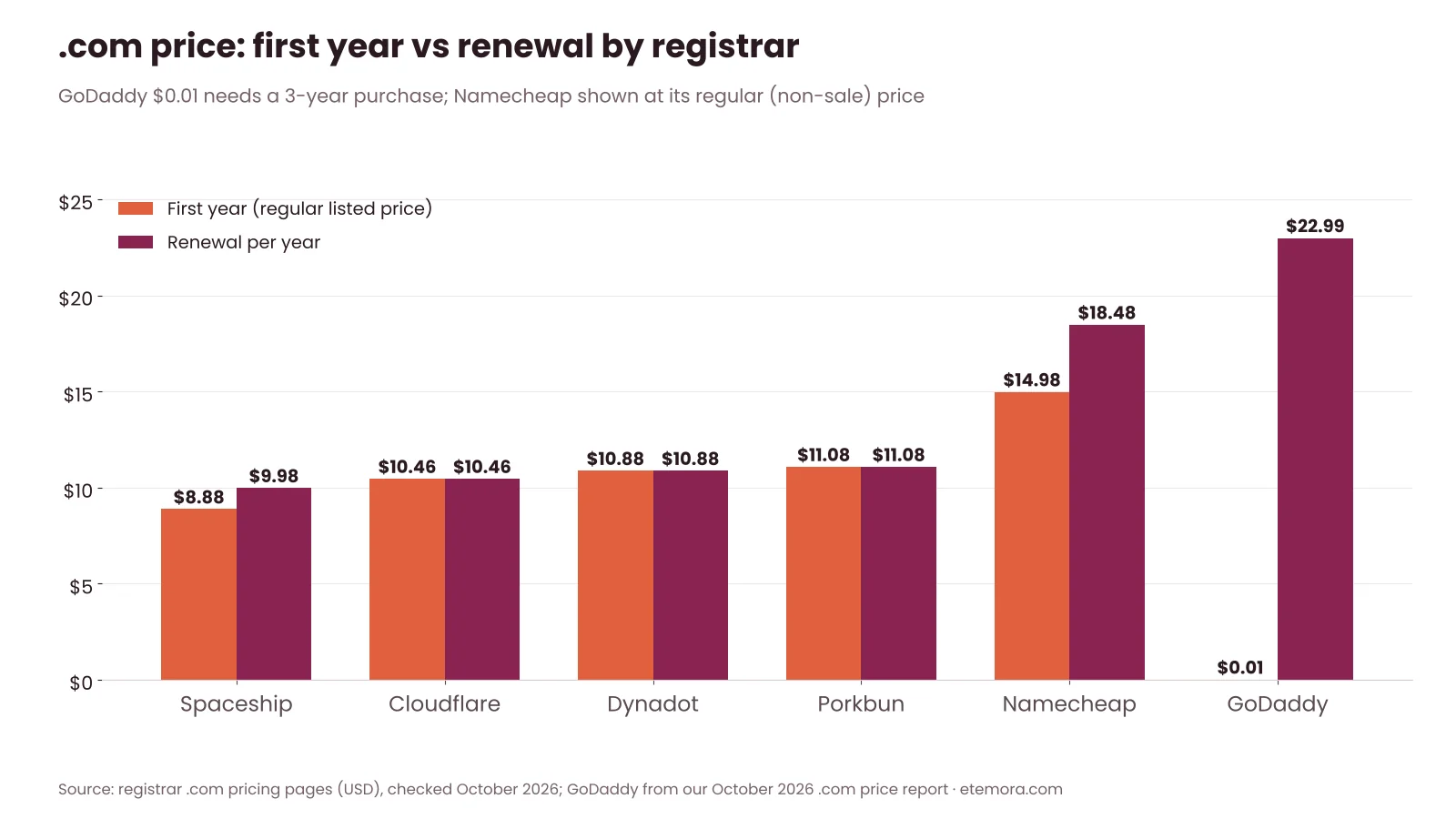
What is a domain name going to cost you? The cost of a domain depends on the extension, the registrar, promotional offers and whether the name is sold at a standard or premium price. Common extensions usually cost a modest amount per year, while premium names and some specialist extensions can cost much more.
The price you see for the first year may differ from the renewal price. For example, when we checked official registrar pages in October 2026, Porkbun listed .com at $11.08 for both registration and renewal, while Namecheap’s regular .com price was $14.98 for the first year and $18.48 to renew. Our guide to the cheapest domain registrars compares more providers.
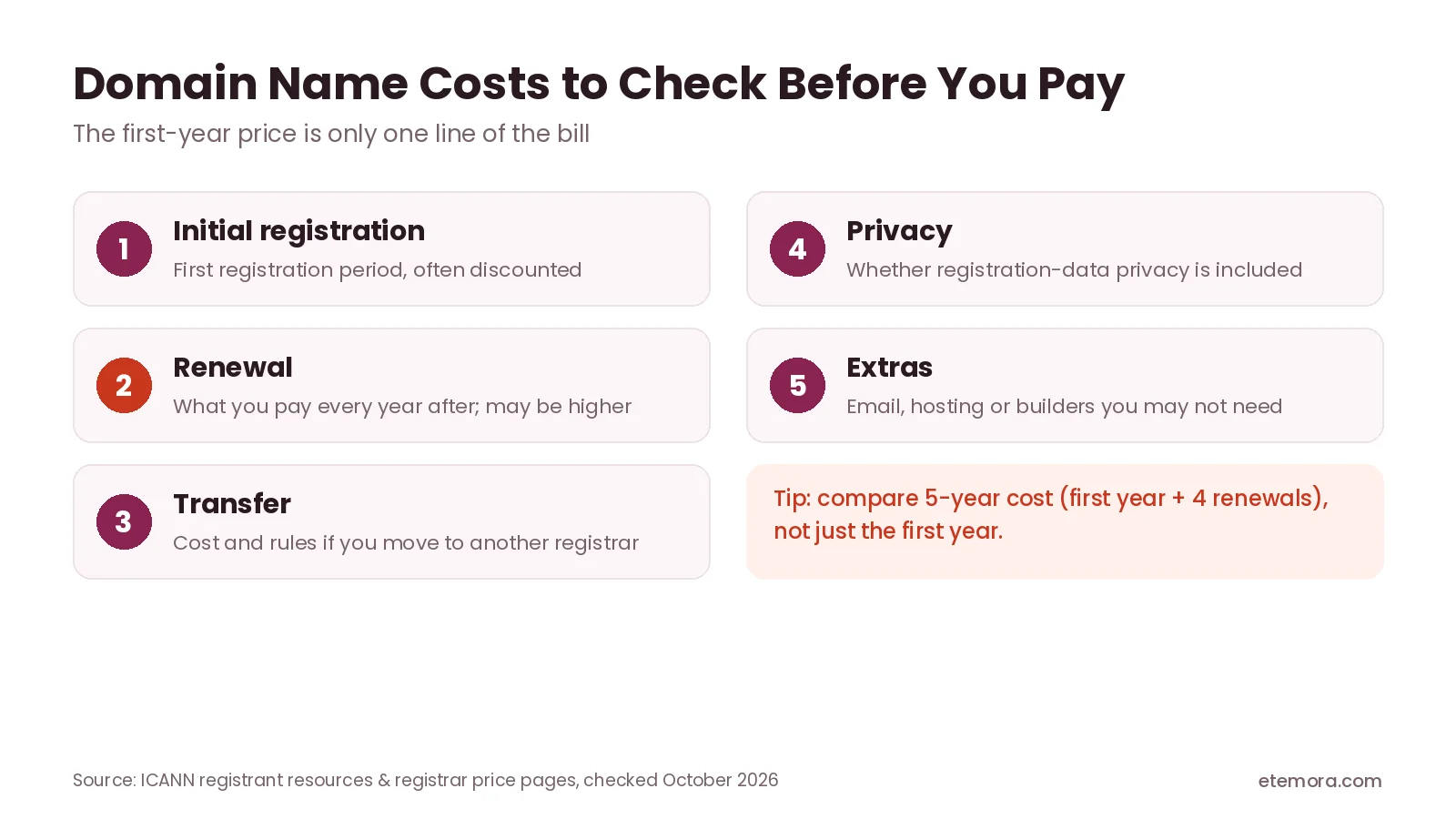
Before purchasing, check these potential costs:
- Initial registration: what you pay for the first registration period.
- Renewal: what it costs to keep the domain for another period.
- Transfer: any charge or requirement if you move the domain to another registrar.
- Privacy: whether registration-data privacy is included or costs extra.
- Additional services: email, hosting, website builders or other optional products.
There is no single price that applies to every domain. Confirm the exact extension, registration term and renewal rate on the registrar’s official website before paying, and read our explainer on why domain renewal prices increase. You can also estimate long-term costs with our domain renewal cost calculator.
How to Register a Domain Name
Now that you know what is a domain name, registering one is usually simple. The key is to choose a suitable name, use a registrar you understand and keep control of the account.
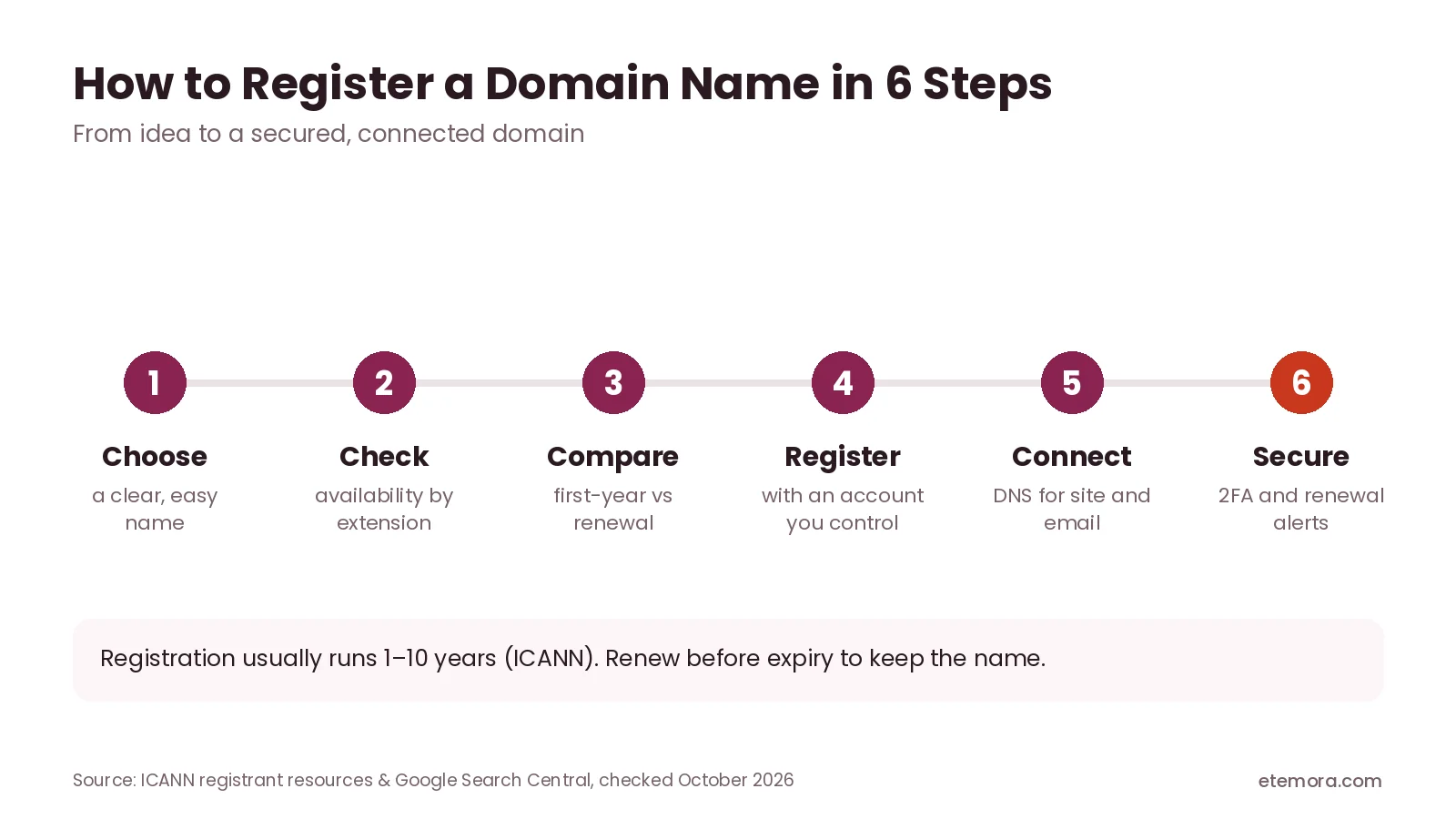
Step 1: Choose a name
Select a name that is easy to spell, pronounce and remember. Check for confusing spellings and possible conflicts with existing businesses or trademarks before building your brand around it.
Step 2: Check availability
Use a registrar’s search tool to see whether the name is available under your preferred extension. If it is taken, consider a meaningful variation or another suitable extension rather than adding random characters.
Step 3: Compare registrars
Compare the initial price, renewal price, privacy options, transfer terms and account features. Read the registration agreement before accepting the purchase.
Want to see if your name is available?
Search Domains at Namecheap →Step 4: Register the domain
Provide the required registration details, choose the registration period and complete the purchase. Keep the confirmation and make sure you can sign in to the registrar account.
Step 5: Connect your website or email
If you are building a website, set the nameservers or DNS records required by your hosting provider or website platform. If you want custom email, add the records your email provider asks for as well.
Step 6: Secure and renew it
Use a strong, unique password and turn on multi-factor authentication if available. Keep your contact and payment details current, watch for expiration notices and decide whether auto-renewal suits you.
ICANN says a registration lasts for the period you choose, typically between one and 10 years, and that you must renew with your registrar before it expires if you want to keep the website, email and other services running. It also notes that ICANN has no authority to transfer expired domain names back to you, so renewal dates matter.

For a more detailed walkthrough with screenshots of the checkout process, see our step-by-step guide on how to buy a domain name.
How to Look Up Who Manages a Domain
If you want to know which registrar manages a domain, when it was registered or when it expires, you can use ICANN’s free Registration Data Lookup tool. It uses the Registration Data Access Protocol (RDAP), which ICANN describes as the replacement for the older WHOIS protocol.
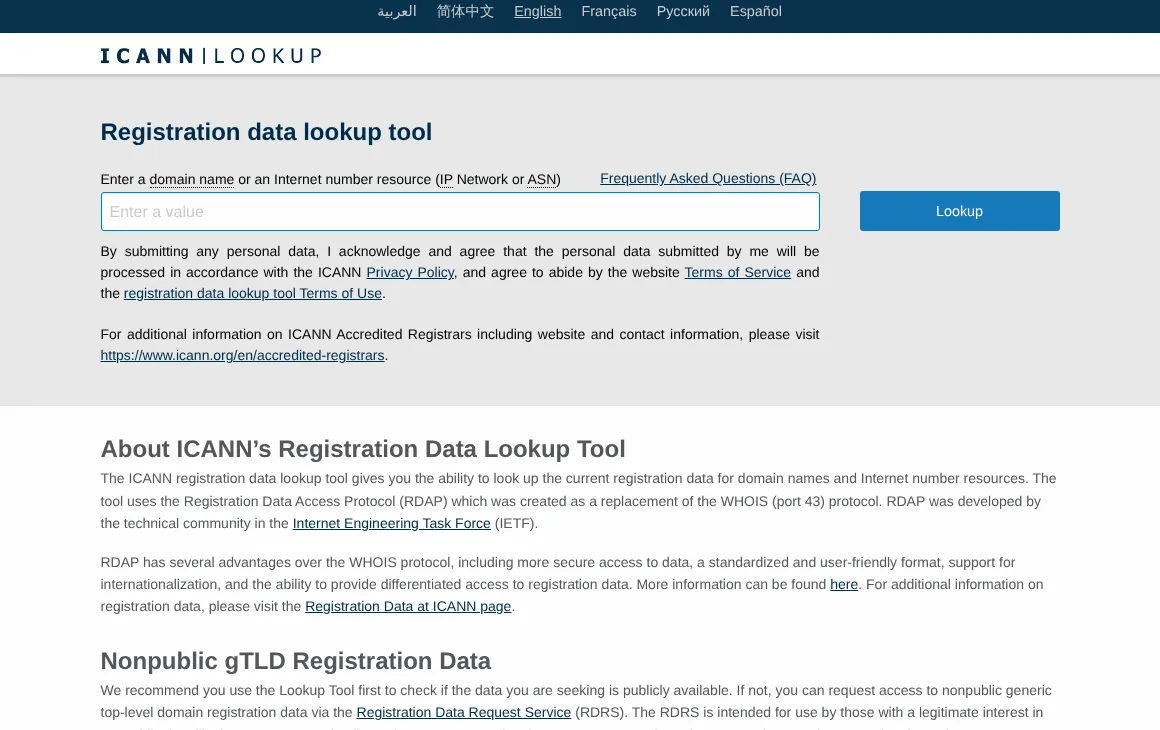
Personal contact details are often redacted or replaced by a privacy service, so you may only see the registrar and dates. That is still useful when you need to find out where your own domain is managed or check when it expires.
ICANN’s page for domain registrants is a good starting point if you want to understand your rights and responsibilities after registering:

Does a Domain Name Affect SEO?
What is a domain name worth for SEO? It can support a clear brand and help visitors understand a website, but it does not guarantee higher Google rankings.
Google’s SEO Starter Guide says keywords in the domain name or URL path have hardly any effect beyond appearing in breadcrumbs, and that the TLD only matters if you are targeting a specific country, and even then it is a low-impact signal. Google also runs systems designed so that exact-match domains do not get too much credit just because the name matches a search.
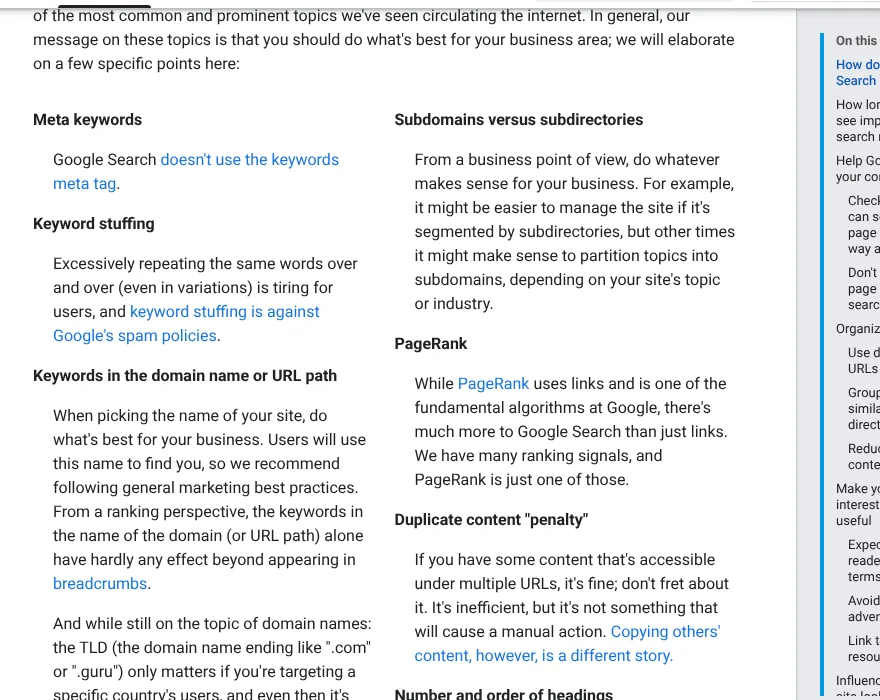
For SEO, focus on useful content, a clear site structure, crawlable pages and a good experience for visitors. Choose a domain that people can remember and that fits your long-term brand rather than forcing a keyword into an awkward name. A descriptive domain can still help when it tells visitors what your business does; just do not treat it as a substitute for a well-built site.
How to Choose a Good Domain Name
The best domain name for your project is easy to use, right for your audience and practical to maintain. Consider these factors before registering one. Our full guide on how to choose a domain name has ten detailed tips.
1. Keep it easy to remember
Short names are often easier to share, but clarity matters more than length. Avoid combinations that people are likely to misspell or misunderstand when they hear the name aloud.
2. Make it fit your purpose
A business domain should match the brand and leave room for growth. A name tied to one narrow product can become restrictive if the company expands.
3. Pick a suitable extension
.com is familiar for many commercial websites, but it is not the only valid choice. Consider the audience, brand, availability and ongoing cost before deciding.
4. Check legal and brand conflicts
Search for similar businesses and trademarks before registering a name. An available domain is not proof that using the name is legally risk-free.
5. Compare renewal terms
Do not judge a registrar only by its first-year offer. Check renewal prices, transfer conditions and the cost of any optional services you actually need.
6. Protect access to the account
Register the domain through an account you control. If a designer or agency helps set it up, confirm that you can sign in and manage the domain yourself. Our list of the most secure domain registrars compares account protection features.
7. Think beyond the website
If you plan to use the domain for email, subdomains or several services, make sure the registrar gives you the DNS controls you need. You do not have to buy hosting and email from the same company.
Common Domain Name Mistakes
Even people who know exactly what is a domain name make a few avoidable mistakes that cause problems long after registration.
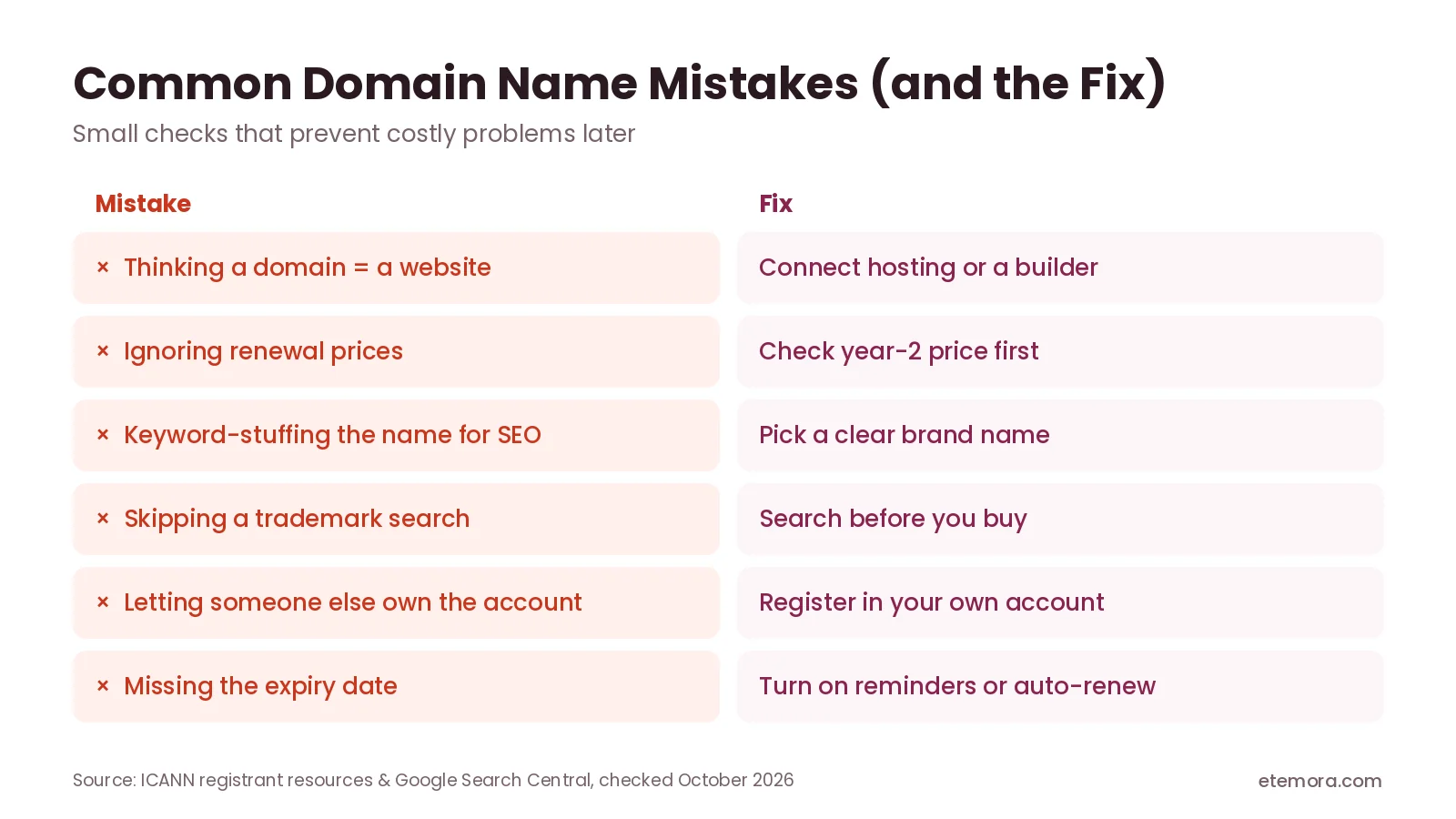
- Confusing a domain with hosting: buying the address does not create a website.
- Ignoring renewal prices: a promotional first year may be followed by a higher standard rate.
- Choosing an awkward name for SEO: keywords in a domain alone do not guarantee better rankings.
- Overlooking trademark issues: availability at a registrar does not mean a name is safe to use.
- Losing account access: a domain becomes hard to manage if you do not control the registrar account.
- Forgetting expiration dates: an expired registration can put your website and email at risk.
- Buying unnecessary extras: you may not need every hosting, email or security add-on offered at checkout.
A little research before registration can prevent avoidable costs and reduce the chance of losing access to an important online asset.
How We Compared
This guide to what is a domain name draws on official ICANN information about domain names, registration, registrars and renewals, the IANA Root Zone Database for the count of top-level domains, and Google Search Central’s guidance on SEO. Example prices come from official registrar price pages. The material was reviewed in October 2026, with the focus on explaining domain concepts and registration responsibilities rather than ranking specific products. This is a research-based guide; we did not run hands-on tests. Read more about how we review products and services.
Final Verdict: What Is a Domain Name?
So, what is a domain name? It is a readable internet address that helps people reach a website or another internet service without remembering a numerical IP address. DNS connects the name to the destination configured for it.
The other half of the answer to what is a domain name is what it is not: a domain is not the same as hosting or a website. You register the name through a registrar, connect it to the services you need, and renew it to keep control of the registration.
- Best fit for a new website: a memorable domain connected to a hosting provider or website builder
- Best for a small business: a brand-appropriate name checked for trademark conflicts
- Best for a professional email address: your own domain plus an email service
- Best for budget-conscious buyers: a registrar with fair renewal prices, not just a cheap first year
If you are ready to register a name, compare providers before checkout and confirm that you control the account.
Ready to register your domain name?
See Namecheap Domain Prices →Frequently Asked Questions
What is a domain name in simple words?
A domain name is the readable address people use to reach a website or internet service. For example, example.com is easier to remember than a numerical IP address. DNS connects the domain name to the destination configured for it, such as a website host or email service.
Is a domain name the same as a website?
No. The domain is the address, while the website is the pages, images and other content. You need a hosting service or website platform to make the site available, then you configure the domain to point to it.
Do I need a domain name to create a website?
Not always. Some website builders give you a free platform address to start with. A custom domain gives you a more recognizable address and supports your branding, business email and long-term online presence.
How much does a domain name cost?
Prices vary by extension, registrar, promotion and whether the name is premium. In October 2026, regular .com registrations at many major registrars cost roughly $9 to $15 for the first year, and renewal can cost more than the first year. Check registration, renewal, transfer and privacy costs before buying.
Who owns a domain name after registration?
The registrant is the person or organization named in the registration agreement. Registering gives the registrant rights and responsibilities under that agreement for the registration period; it is not permanent ownership. Keep account access, contact details and renewal arrangements under your control.
What is DNS and how does it work with a domain name?
DNS stands for Domain Name System. It helps devices find the destination linked to a domain name by looking up its DNS records. Those records can direct website traffic, set up email delivery and connect subdomains to different services.
What is the difference between a domain name and a URL?
A domain name is the main readable name, such as example.com. A URL identifies one specific resource and can include a protocol, the domain, a path and query parameters, for example https://example.com/blog/article. One domain can appear in many URLs.
Can I change my domain name later?
Yes, but it takes planning. You may need to update DNS settings, redirect old URLs, change email settings and tell your users. If your site already gets search traffic, handle the redirects carefully.
How long does a domain registration last?
ICANN says a registration typically lasts between one and 10 years, depending on what you choose. To keep using the domain, renew it before it expires and follow your registrar’s renewal and recovery policies.
Does a domain name help with Google rankings?
A domain name alone does not guarantee higher rankings. Google says keywords in a domain have hardly any ranking effect on their own. Choose a clear, memorable name that suits your brand, then focus on useful content and the overall quality of your website.
Sources
Related articles you may like
 DomainsCheapest Domain Registrars: 6 Best Deals in 2026
 DomainsChoose a Domain Name: 10 Proven Tips for 2026
 Domains.com vs .net vs .io vs .co: Best 2026 Domain Extension Choice
 Domains.com Renewal Prices 2026: What 9 Registrars Charge Above Wholesale
 DomainsNamecheap Review: Honest 2026 Pricing & Features
 DomainsNamecheap vs GoDaddy: 2026 Honest Domain Comparison